
Final up to date: March 2026
Angular stays one of the fashionable frameworks for enterprise internet purposes, and the suitable part library can save a whole bunch of hours of growth time. From Google’s official Angular Materials to business powerhouses like Syncfusion and Kendo UI, the ecosystem gives choices for each funds and mission kind. This information compares 16 Angular UI part libraries side-by-side by reputation, part rely, licensing, and what every one does finest — so you’ll be able to select the suitable basis on your subsequent Angular mission.
Key Highlights
- Angular Materials is the official part library backed by Google, with 25K+ GitHub stars and deep integration with Angular’s ecosystem
- PrimeNG gives the biggest free part set — 80+ parts — making it probably the most feature-rich open-source choice
- Syncfusion offers a free group license for people and small companies (underneath $1M income), protecting 80+ enterprise-grade parts
- AG Grid is the dominant information grid resolution, processing hundreds of thousands of rows with digital scrolling — utilized by 80% of Fortune 500 firms
- Angular adoption stays sturdy in enterprise: 17% {of professional} builders use Angular, and it powers purposes at Google, Microsoft, Samsung, and Deutsche Financial institution
- The Angular staff launched Angular 22 in 2026 with standalone parts as default, alerts, and improved hydration — all libraries on this checklist assist Angular 17+
Angular UI Element Library Comparability (2026)
| Library | GitHub Stars | npm Downloads/wk | Parts | License | Greatest For |
|---|---|---|---|---|---|
| Angular Materials | 25K+ | 2.5M+ | 35+ | MIT (free) | Official Google design system |
| PrimeNG | 10K+ | 800K+ | 80+ | MIT (free) / Industrial | Most parts, free tier |
| NG-ZORRO | 9K+ | 150K+ | 70+ | MIT (free) | Enterprise (Ant Design) |
| Syncfusion | 3K+ | 100K+ | 80+ | Free group / Industrial | Enterprise with free tier |
| Readability | 6K+ | 40K+ | 30+ | MIT (free) | Enterprise design system |
| Nebular | 8K+ | 25K+ | 40+ | MIT (free) | Eva Design System |
| Kendo UI | N/A (business) | 80K+ | 100+ | Industrial ($1,099+/yr) | Most parts (business) |
| DevExtreme | N/A (business) | 70K+ | 70+ | Industrial ($899+/yr) | Knowledge-heavy dashboards |
| Taiga UI | 3K+ | 20K+ | 50+ | Apache 2.0 (free) | Rising open-source choice |
| ng-bootstrap | 8K+ | 600K+ | 20+ | MIT (free) | Bootstrap for Angular |
| NGX-Bootstrap | 5K+ | 350K+ | 20+ | MIT (free) | Different Bootstrap integration |
| Angular CDK | (a part of Angular) | 2.5M+ | 20+ primitives | MIT (free) | Low-level constructing blocks |
| PrimeBlocks | N/A | N/A | 400+ blocks | Industrial ($99+) | Pre-built web page layouts |
| Onsen UI | 8K+ | 15K+ | 30+ | Apache 2.0 (free) | Cell-focused apps |
| AG Grid | 13K+ | 1.5M+ | 1 (information grid) | MIT (free) / Industrial | Knowledge grid specialist |
| Ignite UI | N/A (business) | 25K+ | 60+ | Industrial ($1,295+/yr) | Enterprise (Infragistics) |
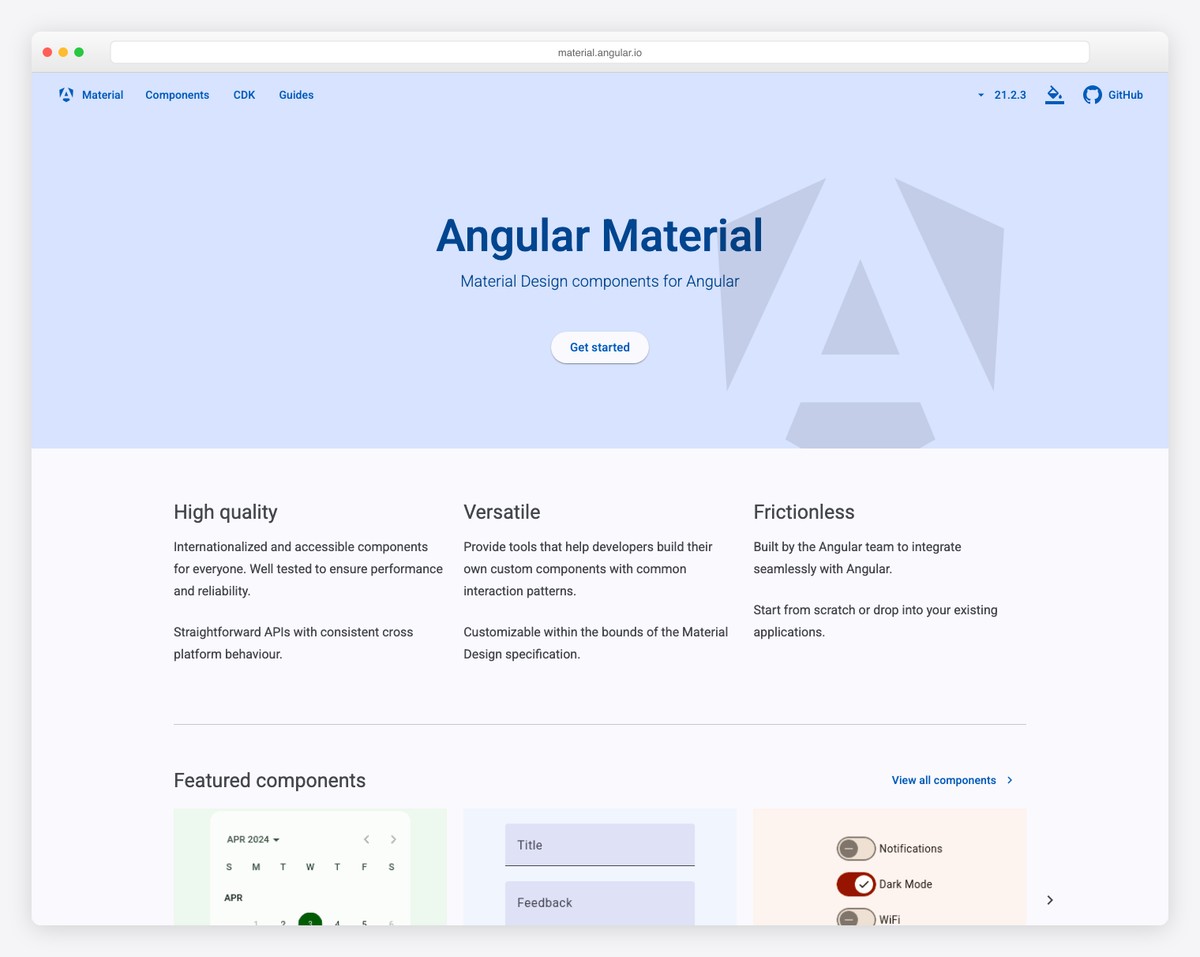
Angular Materials is the official part library constructed and maintained by the Angular staff at Google. It implements Google’s Materials Design specification with 35+ parts together with buttons, varieties, dialogs, tables, tabs, sliders, date pickers, and navigation parts. With over 2.5 million weekly npm downloads, it’s the most generally used Angular part library by a big margin.
The library is deeply built-in with Angular’s structure. Parts use Angular’s CDK (Element Dev Equipment) as a basis, assist Angular’s varieties system natively, and work seamlessly with Angular’s animation and routing modules. Theming is constructed on a strong SCSS system that allows you to create customized themes with constant typography, shade, and density settings. Angular Materials additionally helps the newer Materials 3 (Materials You) design tokens.
Angular Materials’s limitation is its part rely — at 35+ parts, it covers the necessities however lacks superior widgets like wealthy textual content editors, charts, schedulers, or superior information grids that enterprise purposes usually want. The Materials Design aesthetic can be opinionated — in case your mission requires a unique visible type, in depth theming is required. For purposes that observe Materials Design and wish dependable, well-documented parts, Angular Materials is the most secure selection. For richer part units, PrimeNG or business choices fill the gaps. Examine our web development statistics for extra on framework adoption.
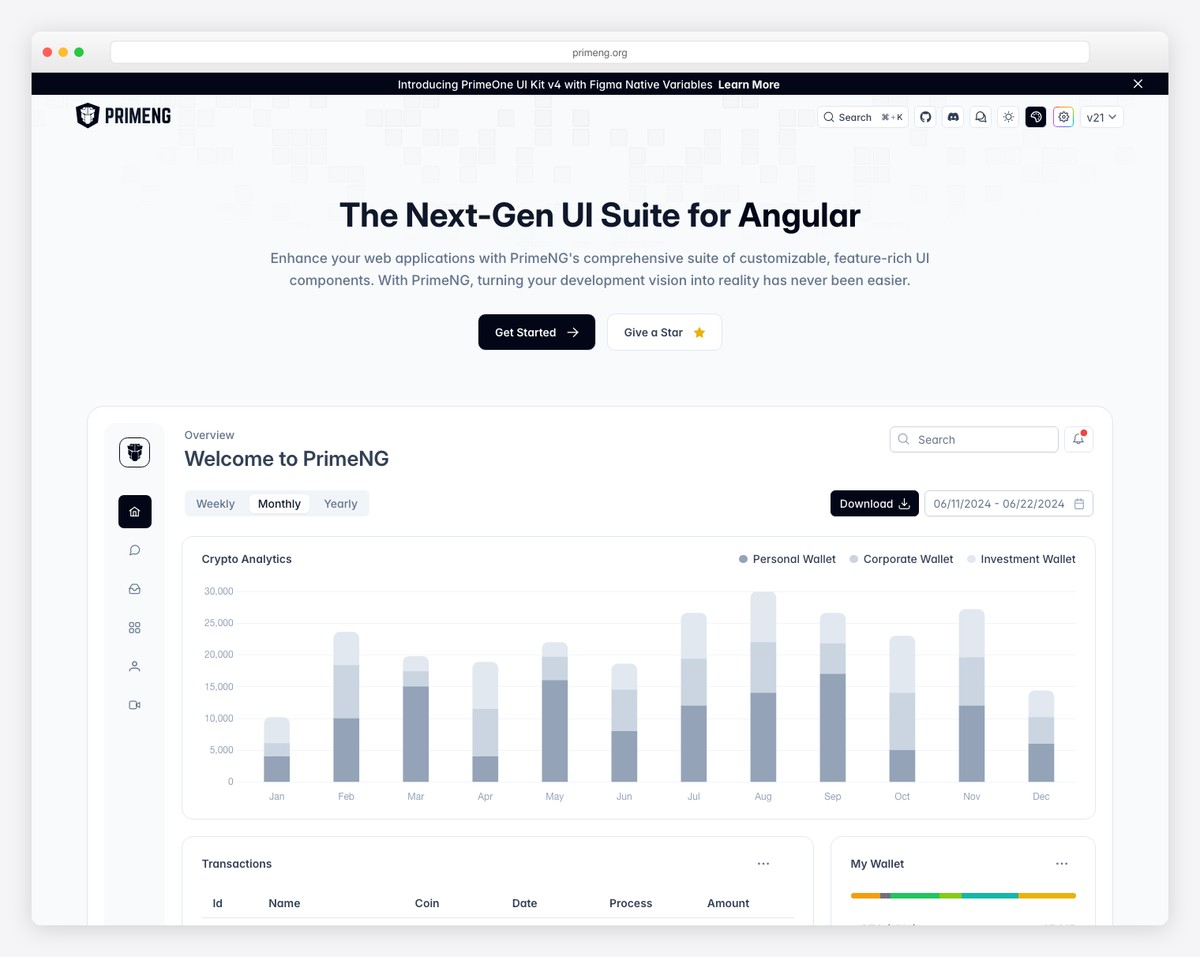
PrimeNG is the most feature-rich open-source Angular part library, providing over 80 parts underneath the MIT license. The suite contains every part Angular Materials offers plus superior parts: information tables with digital scrolling, tree tables, schedulers, charts, editors, file uploaders, drag-and-drop, and even a terminal emulator. For groups that want a complete widget library with out business licensing, PrimeNG is the default selection.
PrimeTek (the corporate behind PrimeNG) additionally gives PrimeFlex (CSS utility library), PrimeIcons, and PrimeBlocks (pre-built web page templates) that stretch the ecosystem. The theming system offers over 30 built-in themes, and the Theme Designer instrument allows you to create customized themes visually. PrimeNG is actively maintained with common releases that observe Angular’s replace cycle.
The trade-off is that PrimeNG’s parts, whereas quite a few, generally lack the polish of Angular Materials or the depth of business options like Kendo UI. The info desk, whereas succesful, doesn’t match AG Grid for efficiency on large datasets. Documentation is strong however can lag behind the newest releases. For tasks that want 40-80 part sorts with out business licensing prices, PrimeNG delivers the perfect breadth-to-price ratio within the Angular ecosystem.
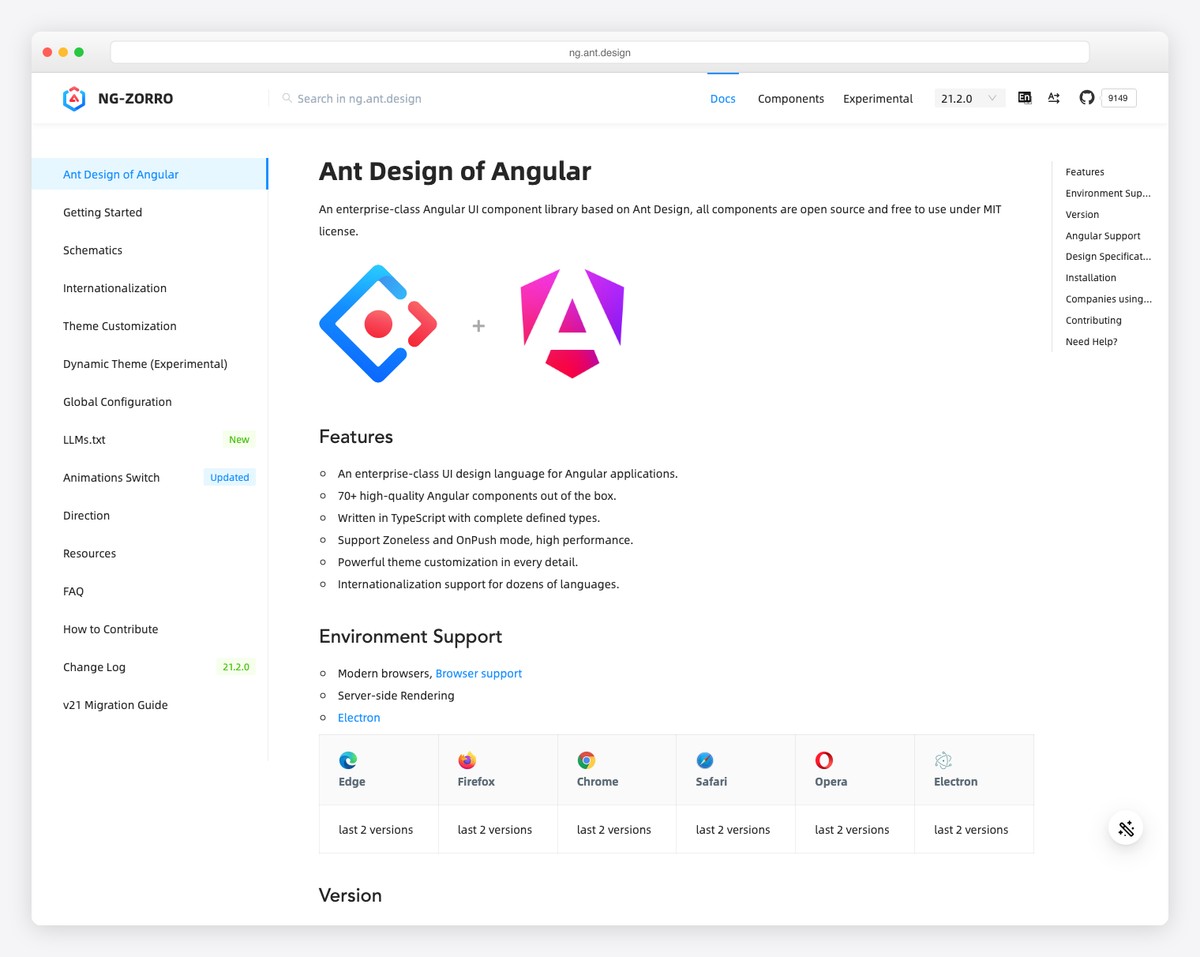
NG-ZORRO brings Alibaba’s Ant Design system to Angular with over 70 enterprise-grade parts. The library follows Ant Design’s specs — a clear, skilled aesthetic that has develop into the de facto design language for Chinese language and plenty of worldwide enterprise purposes. Parts embody information tables, tree views, kind controls, layouts, suggestions parts, and information show widgets.
The library is especially sturdy for enterprise information purposes. The desk part helps digital scrolling, tree information, editable cells, and server-side operations. Kind dealing with is complete with assist for dynamic varieties, validation, and complicated layouts. NG-ZORRO additionally contains internationalization (i18n) assist with over 70 languages inbuilt, which issues for world enterprise deployments.
NG-ZORRO is absolutely MIT licensed, actively maintained, and backed by Alibaba’s design staff. The documentation is thorough with stay examples for each part. The principle consideration is the Ant Design aesthetic — whereas customizable, it has a definite visible id that will not align with all model tips. For enterprise Angular purposes, particularly these serving worldwide markets, NG-ZORRO is a mature, well-supported selection that competes straight with PrimeNG on part depth.
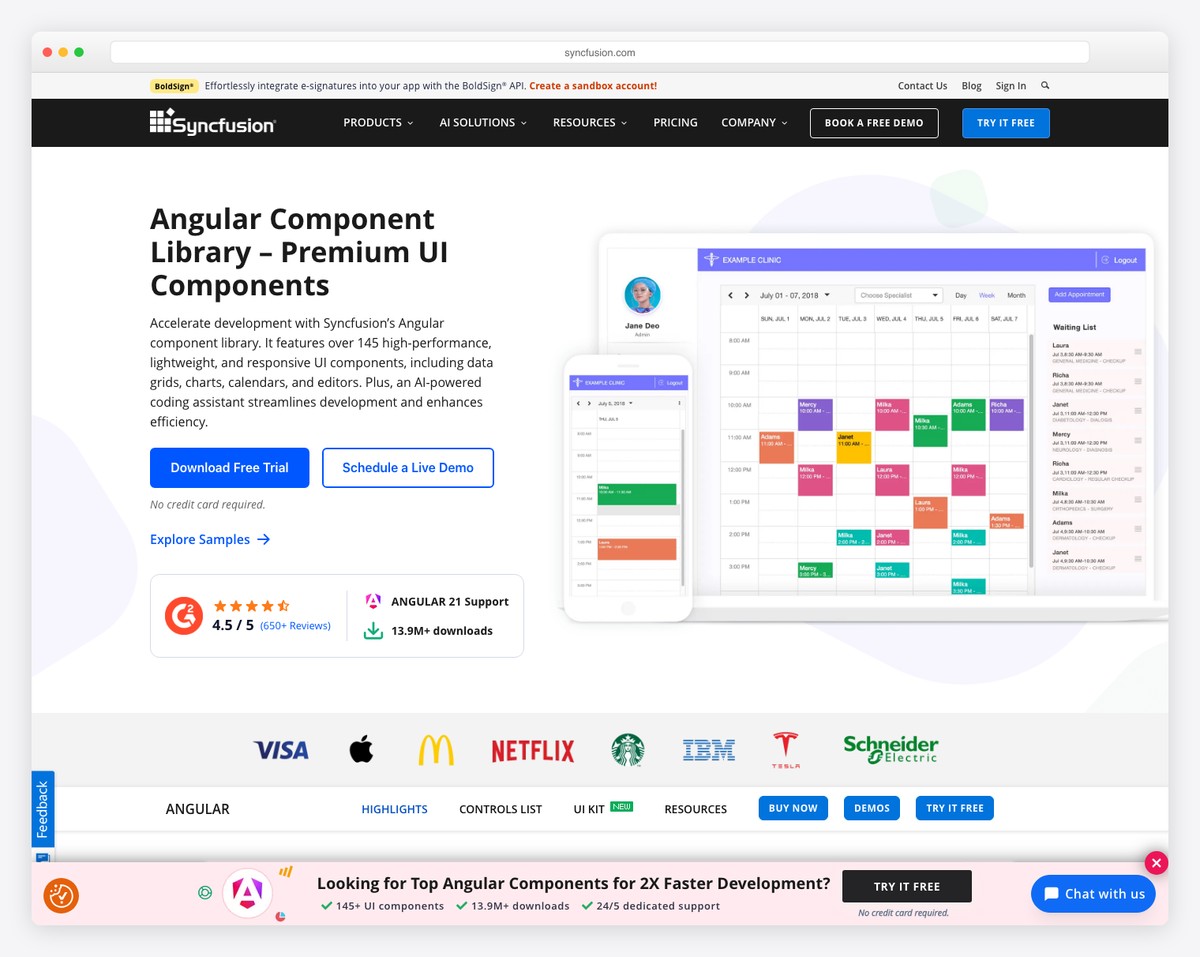
Syncfusion gives 80+ Angular parts with a singular licensing benefit: a free group license for particular person builders and small companies producing lower than $1 million in annual income. This makes enterprise-grade parts — together with superior information grids, schedulers, Gantt charts, wealthy textual content editors, PDF viewers, and diagram builders — accessible to startups and unbiased builders for gratis.
The part high quality is commercial-grade. Syncfusion’s information grid handles hundreds of thousands of rows with virtualization, helps Excel-like filtering and modifying, and contains export to Excel, PDF, and CSV. The scheduler helps a number of views (day, week, month, timeline), drag-and-drop occasions, and useful resource allocation. These are parts that may take months to construct from scratch, offered free underneath the group license.
For bigger organizations, business licenses begin at round $995/developer/12 months, which incorporates assist, updates, and a broader part set. Syncfusion additionally offers Blazor, React, Vue, Flutter, and .NET MAUI libraries, making it enticing for organizations that standardize on one part vendor throughout know-how stacks. The group license makes it uniquely accessible — in case your income is underneath $1M, Syncfusion offers commercial-quality parts totally free.
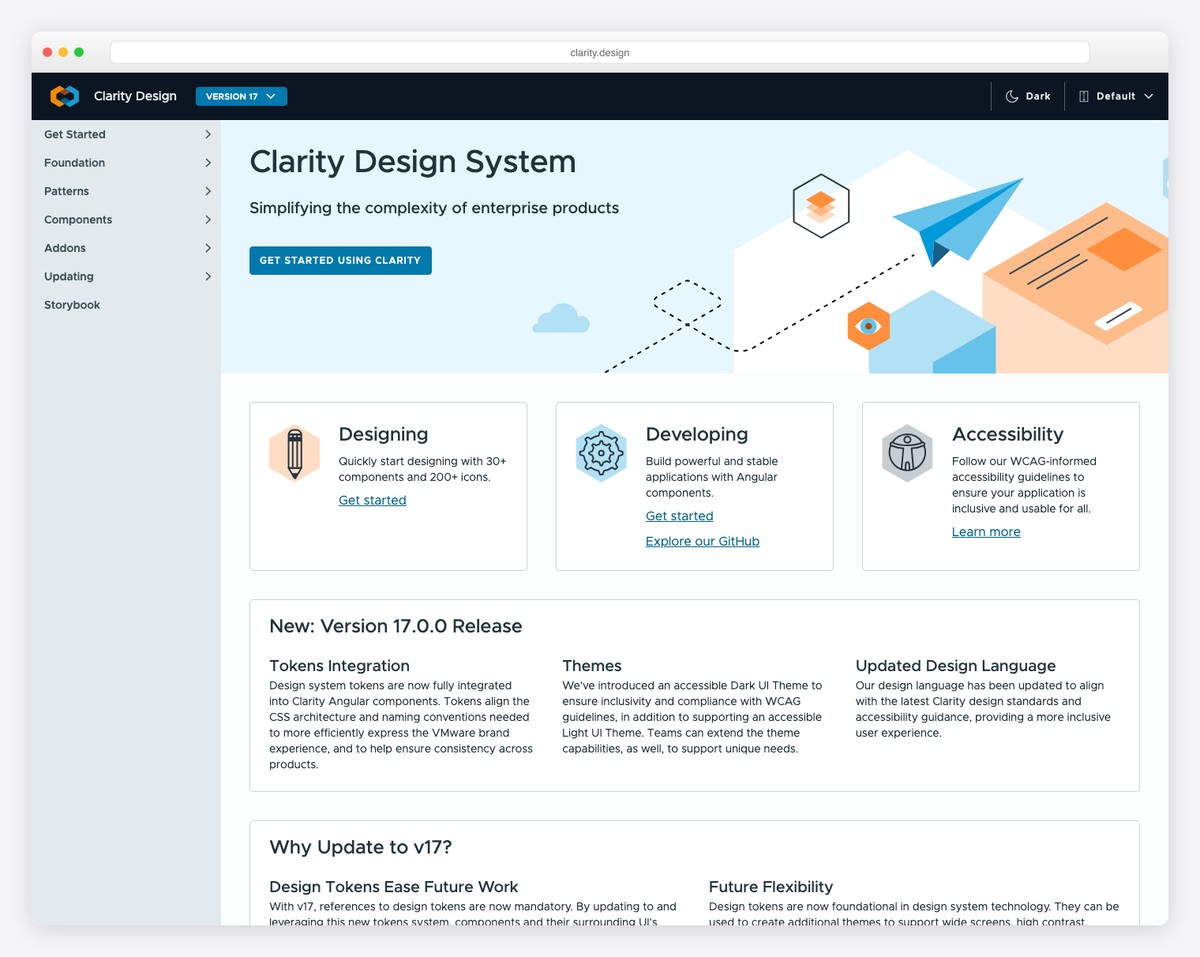
Readability is an open-source enterprise design system initially developed by VMware and now maintained by Broadcom. It offers 30+ parts together with a complete design language, UX tips, and accessibility requirements particularly tailor-made for enterprise and developer-facing purposes. Readability parts observe the Readability Design System specs, which prioritize data density, consistency, and usefulness in data-heavy interfaces.
Core parts embody a extremely succesful information grid (datagrid with filtering, sorting, pagination, expandable rows), varieties, wizards, modals, alerts, and navigation patterns. Readability additionally offers a set of distinctive parts just like the timeline, signpost (contextual assist), and stack view that handle widespread enterprise UI patterns. The library ships with each Angular parts and an internet part model for framework-agnostic use.
Readability’s design system method means you get extra than simply parts — you get opinionated UX steering on methods to construct enterprise purposes. That is helpful for groups with out devoted UX designers however can really feel restrictive in case your design necessities diverge from Readability’s patterns. For enterprise purposes, inside instruments, and admin dashboards the place the Readability aesthetic matches, the library offers a cohesive, well-tested basis. For consumer-facing purposes, the enterprise-oriented design might have vital customization.
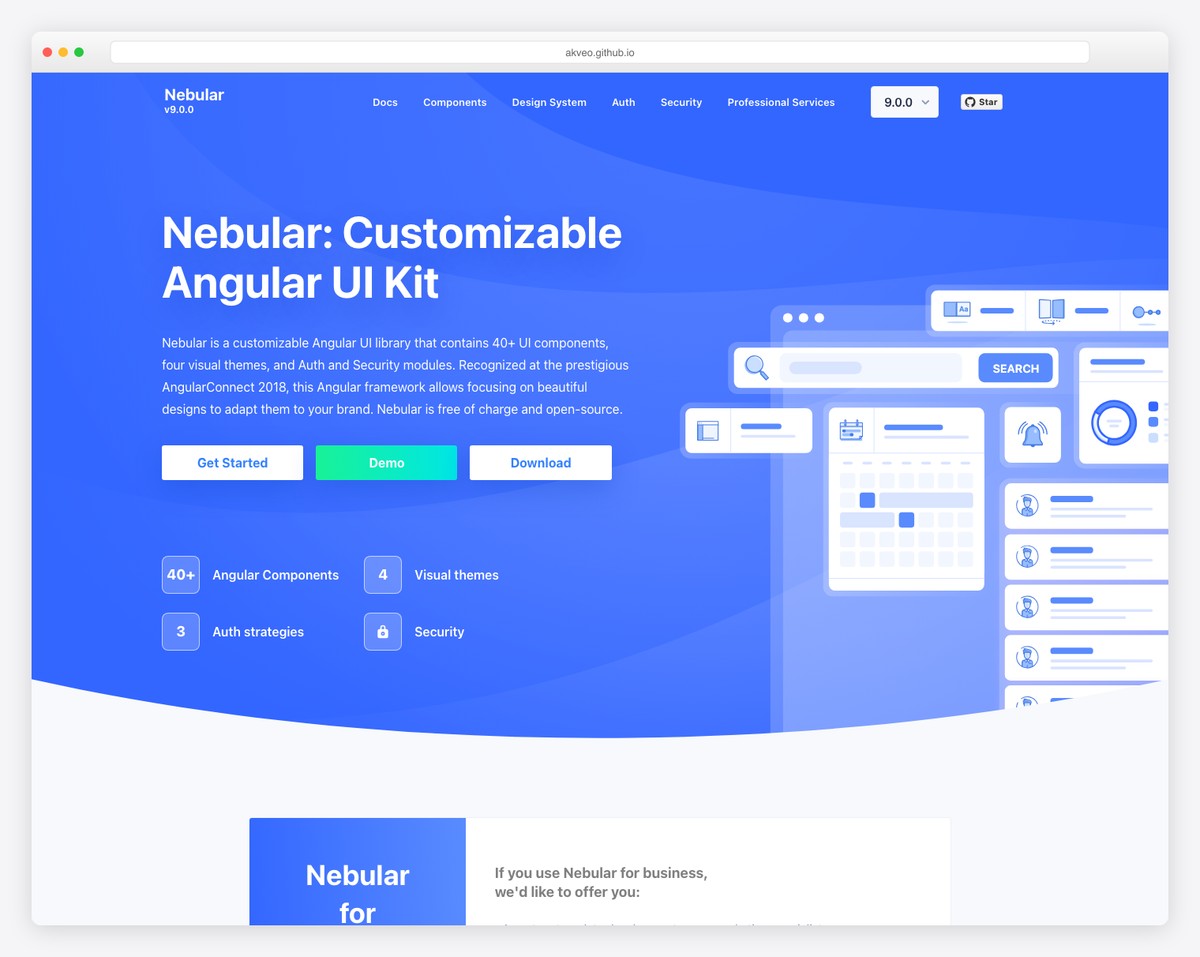
Nebular is an open-source Angular UI library primarily based on the Eva Design System, created by Akveo (the corporate behind ngx-admin). With 8K+ GitHub stars and round 40 parts, Nebular offers a contemporary, customizable basis for Angular purposes. It contains 4 built-in themes (default, darkish, cosmic, company) and a strong theming engine that helps limitless customized themes.
Parts cowl format (sidebar, header, footer), navigation (menu, tabs, stepper), varieties (inputs, selects, datepicker), suggestions (toastr, dialog, spinner), and authentication (login, register, forgot password pages). The authentication module is especially helpful — it offers pre-built auth flows with JWT integration that save vital growth time for brand spanking new tasks.
Nebular’s part rely is smaller than PrimeNG or NG-ZORRO, and the library doesn’t embody superior widgets like information grids, charts, or wealthy textual content editors. It really works finest as a basis that you simply lengthen with specialised libraries (like AG Grid for information tables or Chart.js for visualizations). For admin panels, dashboards, and inside instruments — particularly in case you are ranging from the ngx-admin template — Nebular offers a strong, well-themed base. For purposes needing complete out-of-the-box parts, PrimeNG or Syncfusion supply extra breadth.
Kendo UI for Angular
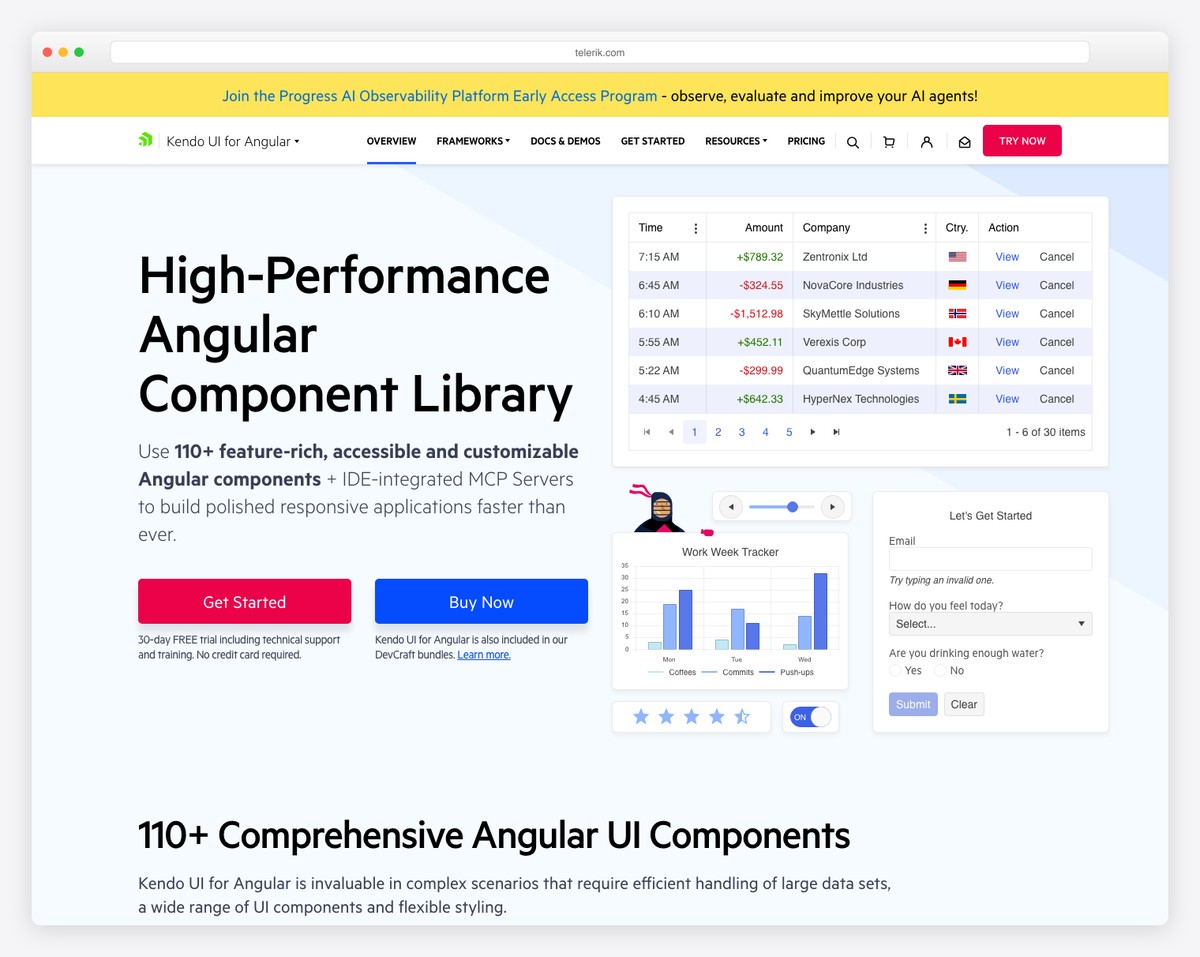
Kendo UI by Progress is a premium business library with over 100 Angular parts — the biggest part set of any Angular library. It covers customary UI parts plus specialised parts like spreadsheets, PDF processing, barcode mills, activity boards, signature pads, and an entire office-style editor. Licenses begin at $1,099/developer/12 months, which incorporates assist, updates, and entry to all Kendo UI frameworks (Angular, React, Vue, jQuery).
Kendo UI’s parts are constructed natively for Angular (not wrapper-based), which ensures optimum efficiency and deep integration with Angular’s change detection, varieties, and routing. The info grid is enterprise-grade with Excel-like modifying, grouping, aggregates, frozen columns, digital scrolling, and export capabilities. The scheduler, charts, and editor parts are among the many most feature-complete in any UI library.
The price is the apparent barrier. At $1,099+/12 months per developer, Kendo UI is a big funding for small groups. Progress justifies the value with devoted assist (together with assured response instances), common updates monitoring Angular releases, {and professional} documentation with in depth examples. For enterprise groups with funds for business instruments, Kendo UI’s part depth, assist high quality, and observe report (20+ years within the UI part market) make it a protected, if costly, selection.
DevExtreme Angular
DevExtreme by DevExpress focuses on data-intensive purposes — dashboards, analytics platforms, and enterprise instruments the place tables, charts, and varieties dominate the interface. The library offers 70+ parts with specific energy in its information grid, pivot grid, charts, and scheduler. Industrial licenses begin at $899/developer/12 months.
The DevExtreme information grid is the library’s flagship — it helps server-side operations, digital scrolling for hundreds of thousands of rows, master-detail views, tree lists, cell modifying, and export to Excel and PDF. The pivot grid offers drag-and-drop information evaluation much like Excel’s PivotTable. The chart library contains 30+ chart sorts with real-time information streaming assist. For purposes the place information visualization and manipulation are the core necessities, DevExtreme’s specialization is its benefit.
DevExtreme helps Angular, React, Vue, and jQuery from the identical codebase, which is efficacious for organizations with combined front-end stacks. The theming system contains Materials Design, Fluent (Microsoft), and generic themes. Documentation is complete with an interactive widget gallery. In comparison with Kendo UI, DevExtreme has fewer whole parts however arguably deeper data-focused options. For dashboard and analytics purposes, DevExtreme’s grid and chart parts are among the many finest obtainable at any value.
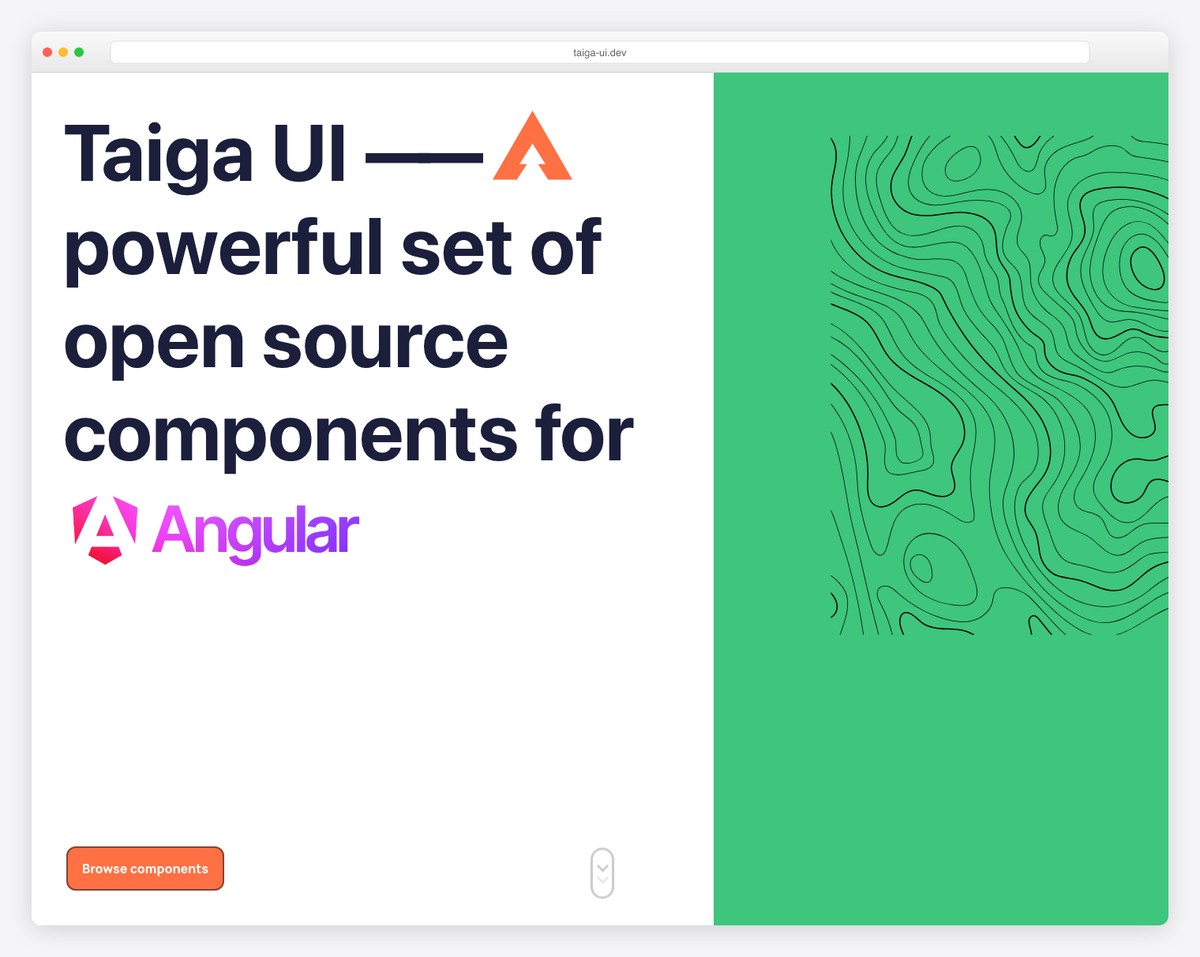
Taiga UI is a comparatively new open-source Angular part library from Tinkoff (a significant Russian digital financial institution) that has been gaining traction internationally. With 3K+ GitHub stars and 50+ parts, it emphasizes customization, accessibility, and trendy Angular patterns. All parts are constructed with standalone parts and alerts in thoughts, making Taiga UI one of the “trendy Angular” libraries obtainable.
The library contains customary parts (buttons, inputs, selects, tables, tabs) plus some unusual ones like enter masks, cellphone quantity formatting, foreign money inputs, and score controls. Taiga UI’s theming engine makes use of CSS customized properties solely, making theme customization so simple as overriding CSS variables. The library additionally offers its personal CDK with reusable utilities for constructing customized parts.
Taiga UI continues to be rising and has a smaller group than Angular Materials or PrimeNG. Documentation is enhancing however might be sparse for some parts. For groups who need a trendy, well-architected open-source library that embraces Angular’s newest patterns (standalone, alerts, zoneless), Taiga UI is price evaluating — particularly for tasks that begin contemporary with out legacy code constraints.
ng-bootstrap offers Bootstrap parts constructed natively for Angular — no jQuery dependency. With 8K+ GitHub stars and 600K+ weekly npm downloads, it’s the preferred Bootstrap-Angular integration. Parts embody accordion, alert, carousel, datepicker, dropdown, modal, navbar, pagination, popover, progressbar, score, tabs, timepicker, toast, tooltip, and typeahead.
The library requires Bootstrap 5 CSS (included individually) and replaces Bootstrap’s JavaScript with Angular-native implementations. This implies all parts work with Angular’s change detection, reactive varieties, and template-driven varieties. The datepicker and typeahead parts are notably well-implemented, with in depth configuration choices and keyboard accessibility.
ng-bootstrap’s part rely (~20) is the smallest of any general-purpose library on this checklist, restricted to what Bootstrap itself offers. It doesn’t embody information grids, charts, editors, or different superior widgets. For tasks that already use Bootstrap for styling and wish Angular-native variations of Bootstrap’s interactive parts, ng-bootstrap is the usual selection. For tasks needing extra parts, mix ng-bootstrap with specialised libraries or use PrimeNG/NG-ZORRO as an alternative. See our roundup of free Bootstrap admin dashboard templates for mission starters.
NGX-Bootstrap is another Bootstrap part library for Angular, developed by Valor Software program. With 5K+ GitHub stars and 350K+ weekly downloads, it gives an analogous part set to ng-bootstrap — modals, datepickers, dropdowns, tabs, tooltips, and extra — however with some implementation variations that builders could desire.
NGX-Bootstrap helps each Bootstrap 4 and Bootstrap 5, which might be helpful for tasks migrating between variations. The library offers complete documentation with stay examples and StackBlitz integration for fast testing. Every part is independently importable, maintaining bundle sizes small if you solely want just a few parts.
The selection between ng-bootstrap and NGX-Bootstrap usually comes all the way down to staff choice and particular part wants. ng-bootstrap has extra downloads and a tighter integration with Bootstrap 5, whereas NGX-Bootstrap gives some further configuration choices and Bootstrap 4 backward compatibility. Each are strong, well-maintained decisions for Angular tasks constructed on Bootstrap. For brand spanking new tasks, ng-bootstrap’s bigger group and nearer monitoring of Bootstrap 5 make it the extra widespread default.
The Angular CDK (Element Dev Equipment) will not be a part library within the conventional sense — it’s a set of low-level constructing blocks for creating your individual parts. Developed by the Angular staff alongside Angular Materials, the CDK offers unstyled primitives for accessibility (a11y), bidirectionality, clipboard, drag-and-drop, format, overlay, portal, scrolling, stepper, desk, textual content discipline, and tree.
For groups constructing customized design methods, the CDK is invaluable. As a substitute of constructing accessible focus administration, digital scrolling, or overlay positioning from scratch, you utilize CDK’s examined, production-ready implementations. Angular Materials itself is constructed on high of the CDK, which demonstrates its functionality and stability. The CDK’s overlay system, specifically, is utilized by nearly each Angular library that wants popups, tooltips, or dropdown positioning.
The CDK is free, included with Angular Materials’s npm package deal, and has no visible opinion — it offers conduct and accessibility with out types. For groups that want pre-styled parts, the CDK alone will not be enough; you continue to want a part library or customized styling. However for organizations constructing their very own part libraries or needing particular low-level behaviors, the Angular CDK is a vital basis that each Angular developer ought to know.
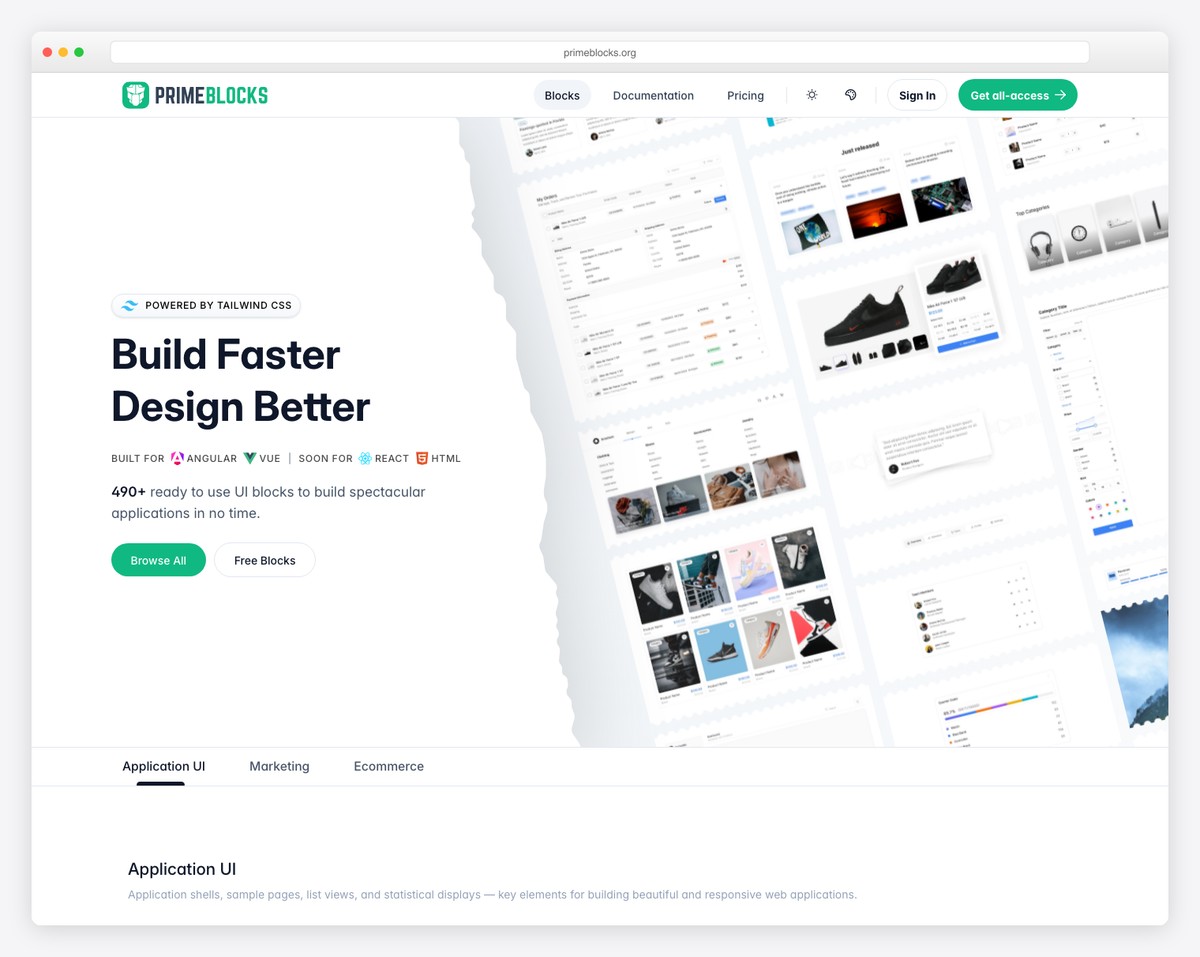
PrimeBlocks is a business product from PrimeTek that gives 400+ pre-built web page blocks and templates utilizing PrimeNG parts. Relatively than particular person UI widgets, PrimeBlocks gives full web page sections — hero areas, pricing tables, function grids, staff sections, dashboards, login pages, and extra — prepared to repeat into your mission and customise.
Blocks are organized by class (advertising, software, ecommerce) and are available a number of variants and themes. Every block is constructed with PrimeNG parts and PrimeFlex CSS, making certain consistency and maintainability. The free tier features a small choice of blocks, whereas the total library ($99+ one-time) offers entry to all blocks and templates, plus a Figma design package for designer-developer handoff.
PrimeBlocks will not be a part library — it’s a productiveness instrument that sits on high of PrimeNG. It accelerates the early phases of growth if you end up constructing customary web page layouts. The worth is highest for businesses and freelancers who construct many comparable Angular purposes and need to skip the repetitive format work. For distinctive, customized designs, PrimeBlocks offers beginning factors fairly than ultimate options.
Onsen UI for Angular
Onsen UI is a mobile-focused UI framework that gives Angular parts optimized for iOS and Android-style interfaces. With 8K+ GitHub stars, it gives parts like web page stacks, tab bars, facet menus, lists, motion sheets, and pull-to-refresh — patterns that cellular customers anticipate however internet part libraries hardly ever implement nicely.
The library routinely adapts its visible type to match the platform — iOS parts look native on iPhone, and Materials Design parts render on Android. This cross-platform visible consistency is Onsen UI’s core worth proposition for groups constructing hybrid cellular apps or progressive internet apps (PWAs) that must really feel native.
Onsen UI’s deal with cellular patterns means it lacks desktop-oriented parts like information grids, advanced varieties, or dashboard layouts. It really works finest with Cordova, Capacitor, or as a PWA framework. For conventional internet purposes, different libraries on this checklist are extra appropriate. However for Angular groups constructing mobile-first purposes that want native-feeling navigation and interplay patterns, Onsen UI fills a distinct segment that general-purpose part libraries overlook.
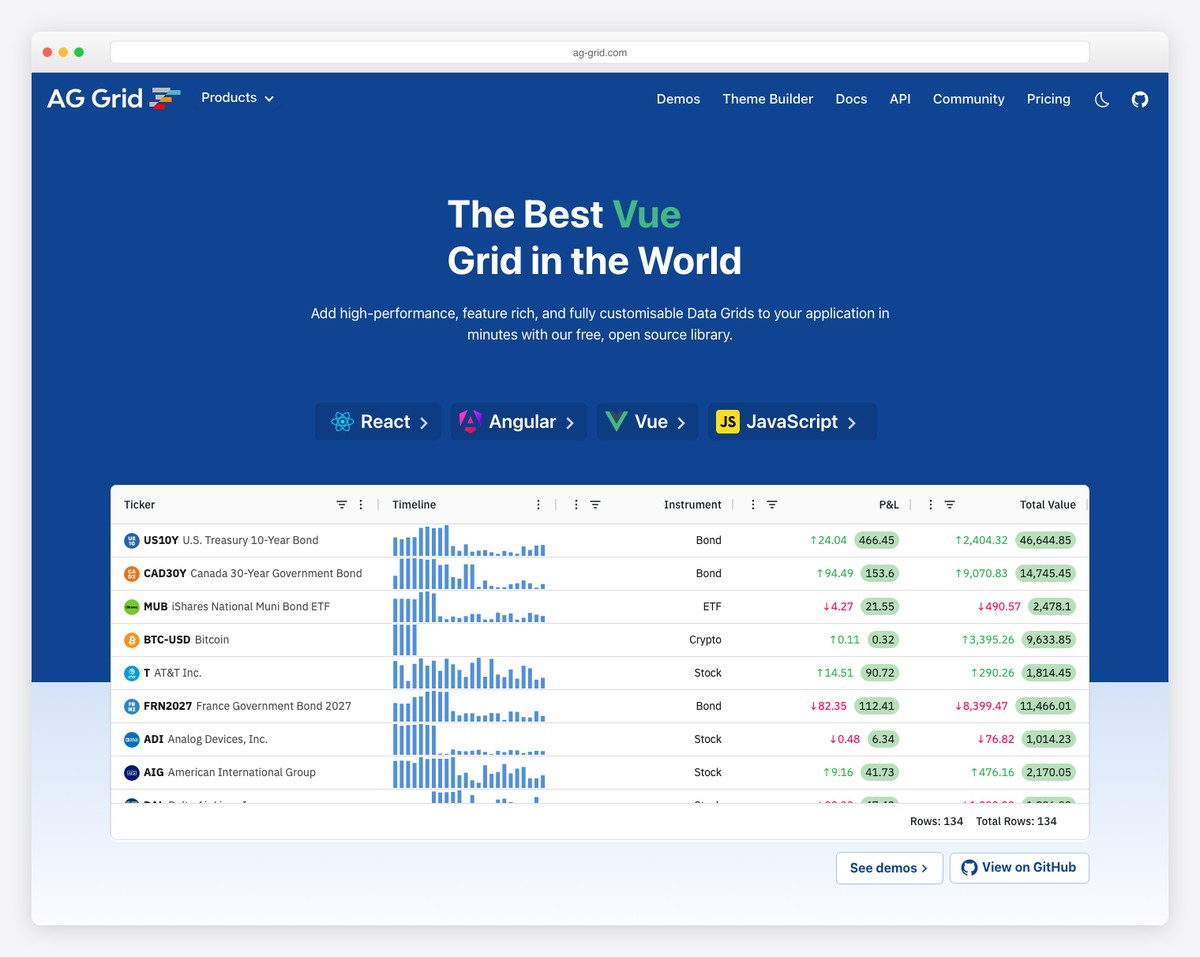
AG Grid is the hottest information grid part within the JavaScript ecosystem, utilized by over 80% of Fortune 500 firms. Whereas it’s a single part (a knowledge grid) fairly than a full library, its specialization makes it the dominant selection when your Angular software must show, type, filter, group, and edit tabular information at scale. The group version is free and MIT-licensed; the enterprise version ($999+/developer) provides superior options.
AG Grid’s free version contains sorting, filtering, pagination, row choice, cell rendering, and fundamental grouping — enough for many information desk wants. The enterprise version provides pivoting, tree information, master-detail rows, server-side row fashions (for hundreds of thousands of rows), Excel-style standing bar, built-in charts, and clipboard operations. Efficiency is phenomenal — AG Grid handles 100,000+ rows with clean scrolling on the group version and hundreds of thousands with server-side mode.
AG Grid integrates cleanly with Angular, React, Vue, and vanilla JavaScript. The Angular model makes use of Angular parts for cell renderers, editors, and filters, making customization really feel native. For purposes the place the info grid is the first interface — admin panels, monetary dashboards, stock methods, CRM instruments — AG Grid’s depth is unmatched. Most groups use AG Grid alongside a basic part library (Angular Materials or PrimeNG) to cowl the remainder of the UI.
Ignite UI for Angular
Ignite UI by Infragistics is a business Angular part suite with 60+ parts aimed toward enterprise software growth. Licenses begin at $1,295/developer/12 months, positioning it as a premium choice alongside Kendo UI. The library contains information grid, charts, maps, gauges, schedulers, spreadsheet, dock supervisor, and pivot grid — a complete toolkit for data-rich enterprise purposes.
Infragistics differentiates via its App Builder — a low-code instrument that generates Angular code from visible designs. Designers create layouts within the App Builder (or import from Figma/Sketch), and the instrument generates production-ready Angular code utilizing Ignite UI parts. For organizations with separate design and growth groups, this workflow can considerably cut back the hole between design mockups and applied code.
At $1,295+/12 months, Ignite UI is the costliest choice on this checklist. It competes straight with Kendo UI and DevExtreme on options and assist. The App Builder instrument is the important thing differentiator — in case your workflow advantages from visual-to-code era, Ignite UI’s built-in tooling offers worth past the parts themselves. For groups evaluating business choices, examine Ignite UI, Kendo UI, and DevExtreme via trial variations to find out which part set and developer expertise most closely fits your particular software necessities.
FAQ
What’s the finest free Angular part library?
PrimeNG is the perfect free Angular part library for breadth, with 80+ parts underneath the MIT license. Angular Materials is the most secure selection for long-term assist since it’s maintained by the Angular staff at Google. NG-ZORRO is the perfect free choice for enterprise purposes, particularly these following Ant Design patterns. For groups underneath $1M income, Syncfusion’s free group license offers commercial-quality parts for gratis.
Angular Materials vs PrimeNG — which ought to I select?
Select Angular Materials in case your software follows Materials Design, you need official Google assist, and also you solely want 35 fundamental part sorts. Select PrimeNG in case you want extra parts (80+), need a number of built-in themes, or want superior widgets like information tables, charts, editors, and schedulers that Angular Materials doesn’t embody. Many groups use Angular Materials as the bottom and add PrimeNG parts the place Angular Materials falls quick.
What’s the finest Angular part library for enterprise?
At no cost choices, NG-ZORRO (Ant Design) and Readability (VMware/Broadcom) are particularly designed for enterprise purposes. For business choices, Kendo UI (100+ parts, $1,099/yr) and Syncfusion (80+ parts, free group license obtainable) are the main decisions. The best selection relies on part wants, funds, and whether or not your staff is underneath Syncfusion’s $1M income threshold for the free group license.
What’s the finest Angular library for dashboards?
For data-heavy dashboards, DevExtreme excels with its information grid, pivot grid, and charting parts. AG Grid (free or enterprise) is the perfect standalone information grid for performance-critical tables. At no cost dashboard foundations, PrimeNG plus AG Grid (group version) offers a complete widget set. Nebular with the ngx-admin template gives a ready-made dashboard start line. See our free admin dashboard templates for pre-built choices.
Key Takeaways
- Angular Materials is the most secure default selection with official Google backing, however its 35 parts could not cowl all enterprise wants — use it as a basis and complement with specialised libraries.
- PrimeNG gives probably the most parts (80+) totally free underneath MIT license, making it the perfect breadth-to-cost choice for groups that want a complete widget set with out business licensing.
- Syncfusion’s free group license is a hidden gem — 80+ enterprise-grade parts for gratis for people and firms underneath $1M income.
- For data-intensive purposes, AG Grid is the specialist selection that almost all enterprise Angular groups find yourself utilizing no matter their major part library.
- Industrial libraries like Kendo UI ($1,099/yr) and Ignite UI ($1,295/yr) justify their value via complete part units, devoted assist, and — in Ignite UI’s case — visible design-to-code tooling.
Was this text useful?
SureNo
