
Selecting a CSS framework in your admin dashboard is among the earliest — and most consequential — architectural choices you’ll make. Bootstrap, Tailwind CSS, and Material UI every take essentially completely different approaches to styling, and that alternative cascades into your part library, bundle measurement, hiring pool, and long-term upkeep burden.
This comparability makes use of actual information — GitHub stars, npm obtain numbers, bundle measurement benchmarks, and developer survey outcomes — that can assist you make an knowledgeable choice. We’ve centered particularly on the admin dashboard use case, the place the framework alternative issues greater than for advertising websites or blogs.
Desk of contents — all 12 sections
- Bootstrap Dashboard Templates
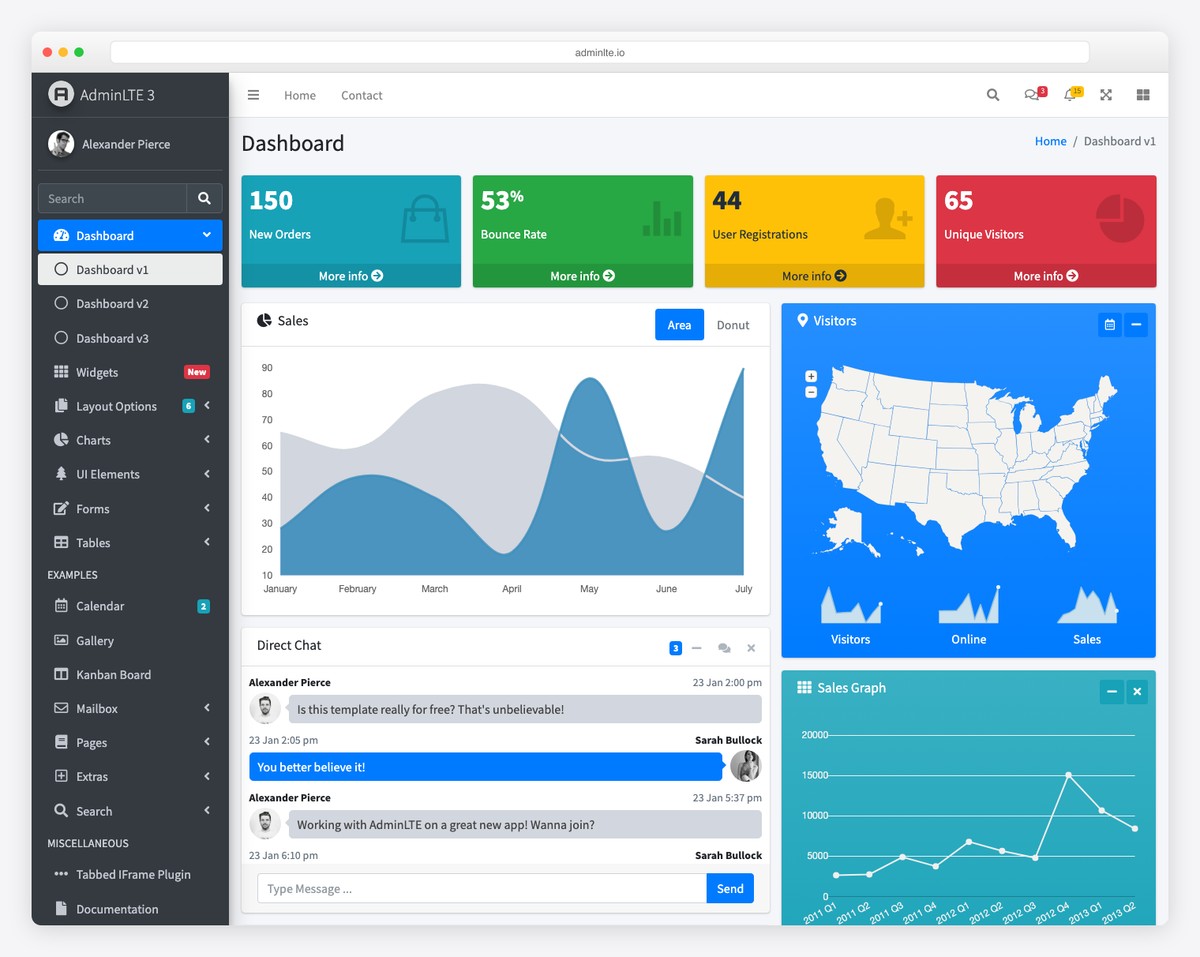
- AdminLTE
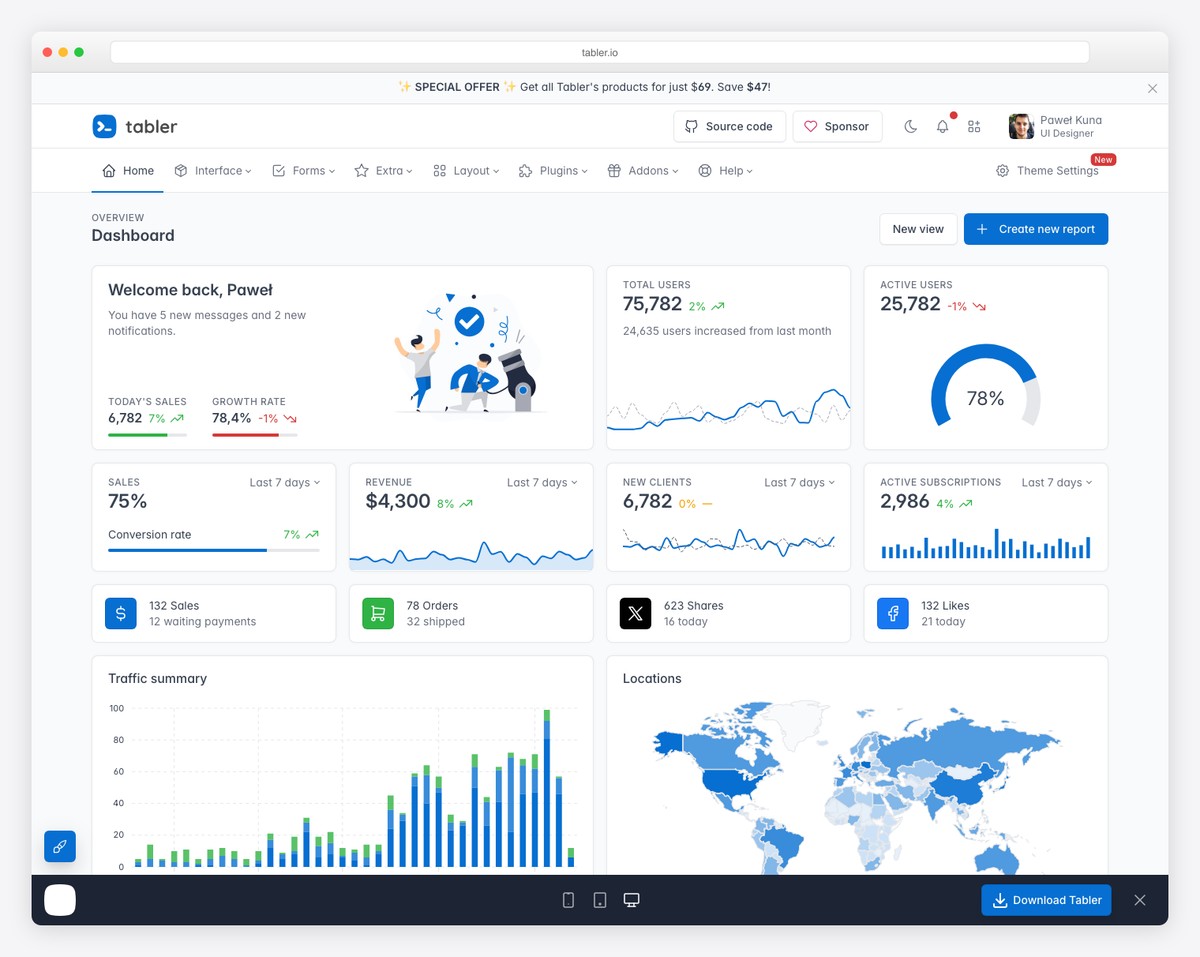
- Tabler
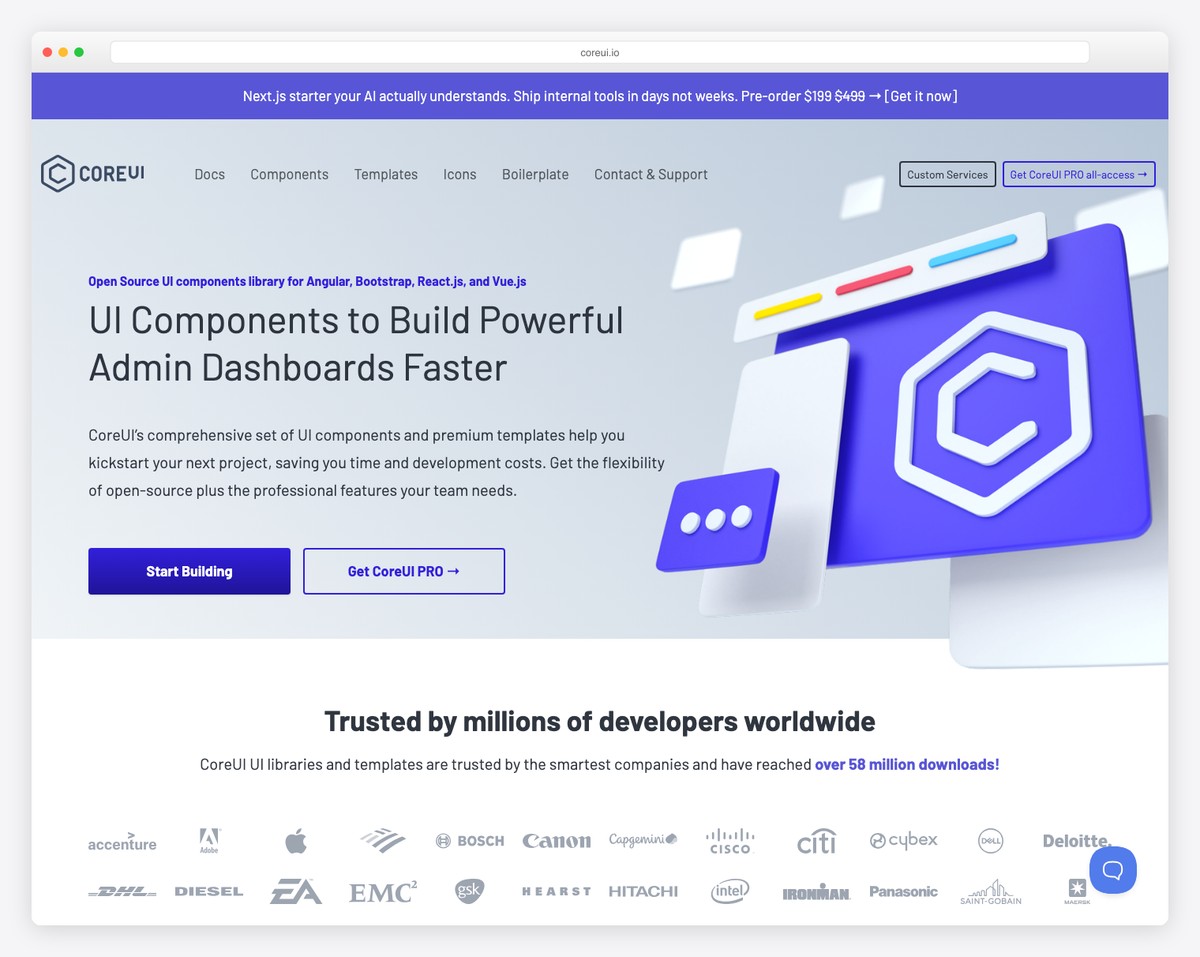
- CoreUI
- Tailwind CSS Dashboard Templates
- Shadcn Admin
- Mosaic Lite
- TailAdmin
- Material UI Dashboard Templates
- Materio
- Berry
- Mantis
Additionally on this web page: Quick Verdict Table · Performance and Bundle Size · Component Ecosystem · Customization and Theming · Developer Experience · When to Use Each Framework · The Market Is Shifting · Frequently Asked Questions
Fast Verdict Desk
| Metric | Bootstrap 5 | Tailwind CSS v4 | Materials UI v6 |
|---|---|---|---|
| GitHub Stars | 174,111 | 94,172 | 98,080 |
| NPM Weekly Downloads | 2.7M | 69M | 6.7M (@mui/materials) |
| First Launch | 2011 | 2017 | 2014 |
| Present Model | 5.3.x | v4 | v6 |
| Method | Element-based CSS | Utility-first CSS | React part library |
| Manufacturing CSS (gzipped) | ~30 KB CSS + ~23 KB JS | 6-12 KB (purged) | 200 KB+ (component-rich) |
| Framework Lock-in | None (works with any) | None (works with any) | React solely |
| Studying Curve | Best | Average | Steepest (requires React) |
| Darkish Mode | Constructed-in colour modes | darkish: variant |
Theme palette |
| State of CSS 2025 Utilization | 21.6% | 37% | N/A (React-specific) |
| Finest For | Speedy prototyping, enterprise | Customized designs, SaaS | React apps, Materials Design |
Efficiency and Bundle Measurement
Bundle measurement issues for admin dashboards — your customers load the dashboard repeatedly all through their workday, and heavy CSS/JS payloads add up. Right here’s how the three frameworks examine with actual benchmark information.
| Metric | Bootstrap 5 | Tailwind CSS (purged) | Materials UI |
|---|---|---|---|
| Full CSS bundle (gzipped) | ~30 KB CSS + ~23 KB JS = ~53 KB | 6-12 KB | 200 KB+ (varies by parts used) |
| Typical manufacturing construct (minified) | ~72 KB | 8-42 KB (is dependent upon utility utilization) | Varies (tree-shakeable) |
| Actual-world case examine | 245 KB | 15 KB | N/A |
| Core Net Vitals influence | Baseline | ~40% higher CWV scores | Requires code-splitting optimization |
Tailwind CSS wins decisively on bundle measurement. Its JIT compiler solely generates CSS for courses really utilized in your markup, producing manufacturing bundles as small as 6-12 KB gzipped. One real-world case examine confirmed a Tailwind construct at 15 KB in comparison with Bootstrap’s 245 KB for the same admin dashboard.
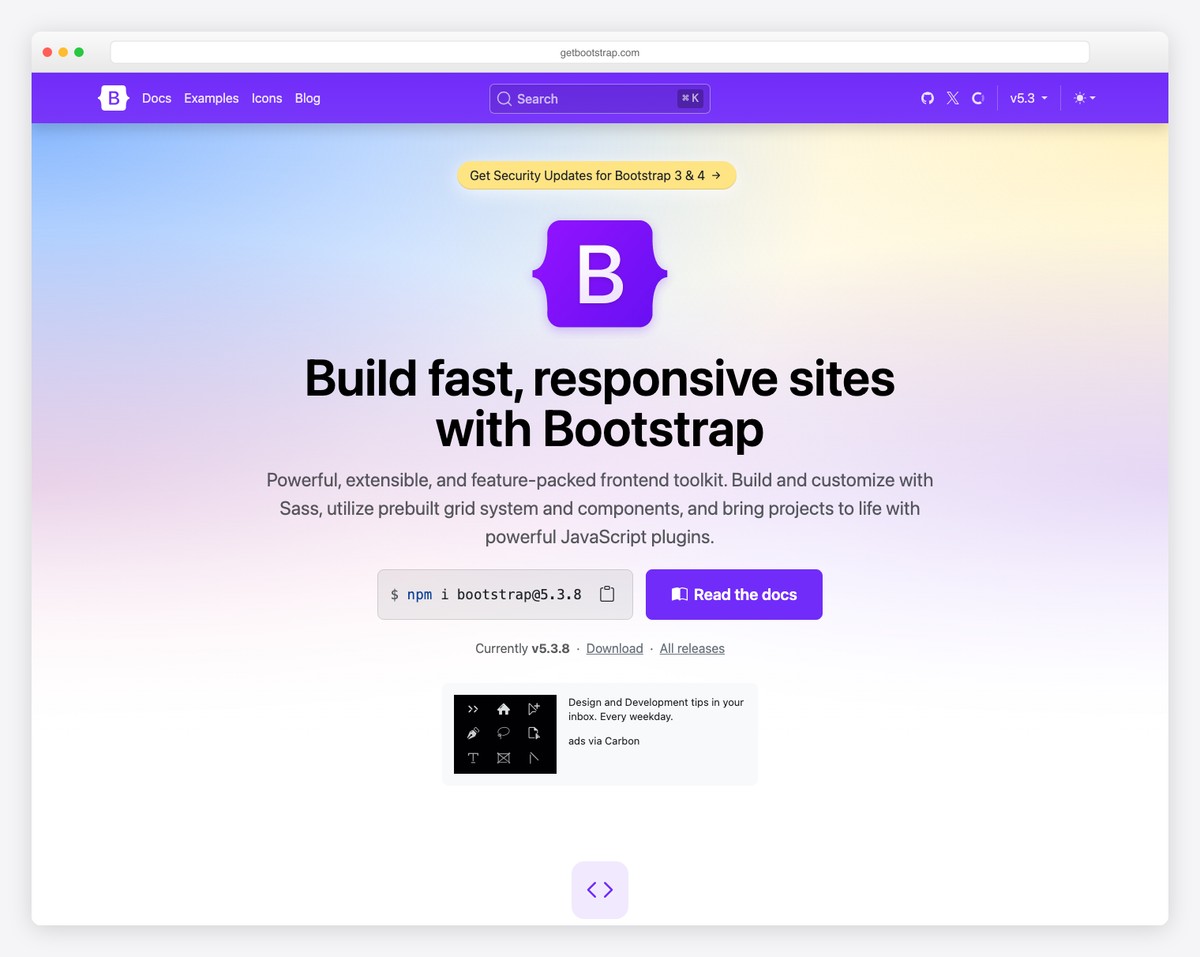
Bootstrap’s bundle is predictable however bigger. The total framework weighs ~53 KB gzipped (CSS + JS). You possibly can scale back this by importing solely the parts you want, however the financial savings are modest in comparison with Tailwind’s purge-based method.
Materials UI is the heaviest on account of its CSS-in-JS method (Emotion) and complete part library. Tree-shaking helps, however a typical MUI admin dashboard ships considerably extra CSS/JS than both Bootstrap or Tailwind equivalents. The trade-off is that MUI’s parts embody advanced behaviors (autocomplete, information grid, date pickers) that might require extra libraries with the opposite two frameworks.
For Core Net Vitals particularly, benchmarks present Tailwind CSS-enabled pages typically outperform Bootstrap on First Contentful Paint (FCP) and Time to Interactive (TTI) on account of leaner CSS payloads. MUI efficiency relies upon closely on how properly you implement code-splitting and lazy loading of heavy parts.
Element Ecosystem
An admin dashboard lives or dies by its part library. Information tables, charts, types, modals, navigation patterns — you want all of them, and also you want them to work collectively. Right here’s how every framework’s ecosystem handles the admin dashboard part set.
| Element Want | Bootstrap 5 | Tailwind CSS | Materials UI |
|---|---|---|---|
| Buttons, badges, alerts | Constructed-in | Through headless UI / shadcn/ui / DaisyUI | Constructed-in |
| Modals, dropdowns, tooltips | Constructed-in with JS plugins | Through Headless UI or Radix UI | Constructed-in |
| Information tables | Bootstrap Desk / DataTables | Tanstack Desk + customized styling | MUI Information Grid (superior) |
| Charts | Chart.js / ApexCharts (separate) | Recharts / ApexCharts (separate) | MUI Charts / Recharts |
| Date pickers | Flatpickr / third-party | Third-party | MUI Date Pickers (built-in) |
| Autocomplete | Third-party | Third-party / cmdk | MUI Autocomplete (built-in) |
| Navigation (sidebar) | Constructed-in (navbar, offcanvas) | Customized or part libraries | MUI Drawer, AppBar |
| Type validation | Constructed-in HTML5 validation | React Hook Type + customized | MUI + React Hook Type |
| Admin templates obtainable | Dozens (AdminLTE, CoreUI, and many others.) | Rising quick (shadcn admin, TailAdmin) | A number of (Materio, Berry, Minimal) |
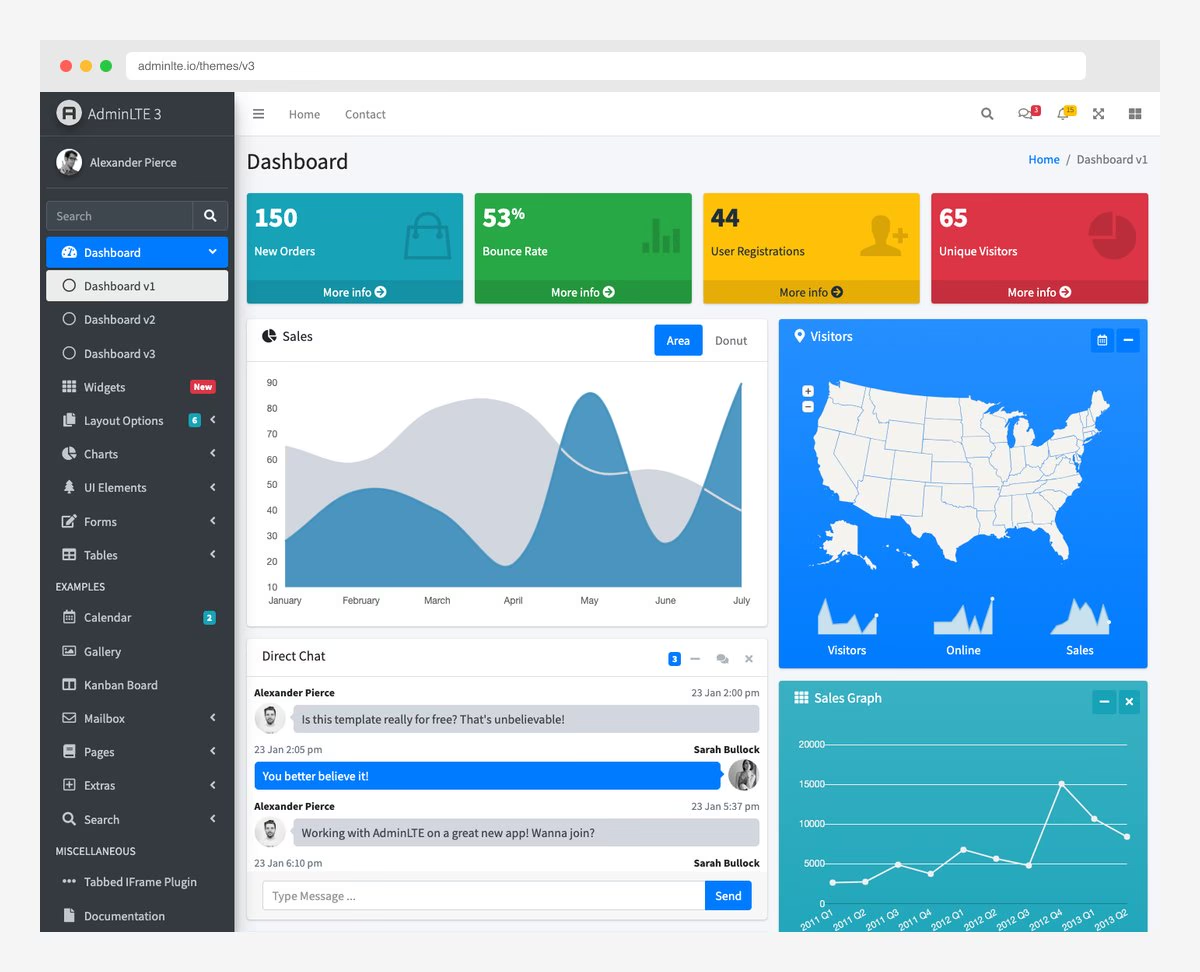
Bootstrap has the longest observe document and probably the most admin templates. AdminLTE alone has 45,000+ GitHub stars. The part set covers 80% of admin dashboard wants out of the field, and the remaining 20% (charts, superior tables) has well-established plugin integrations.
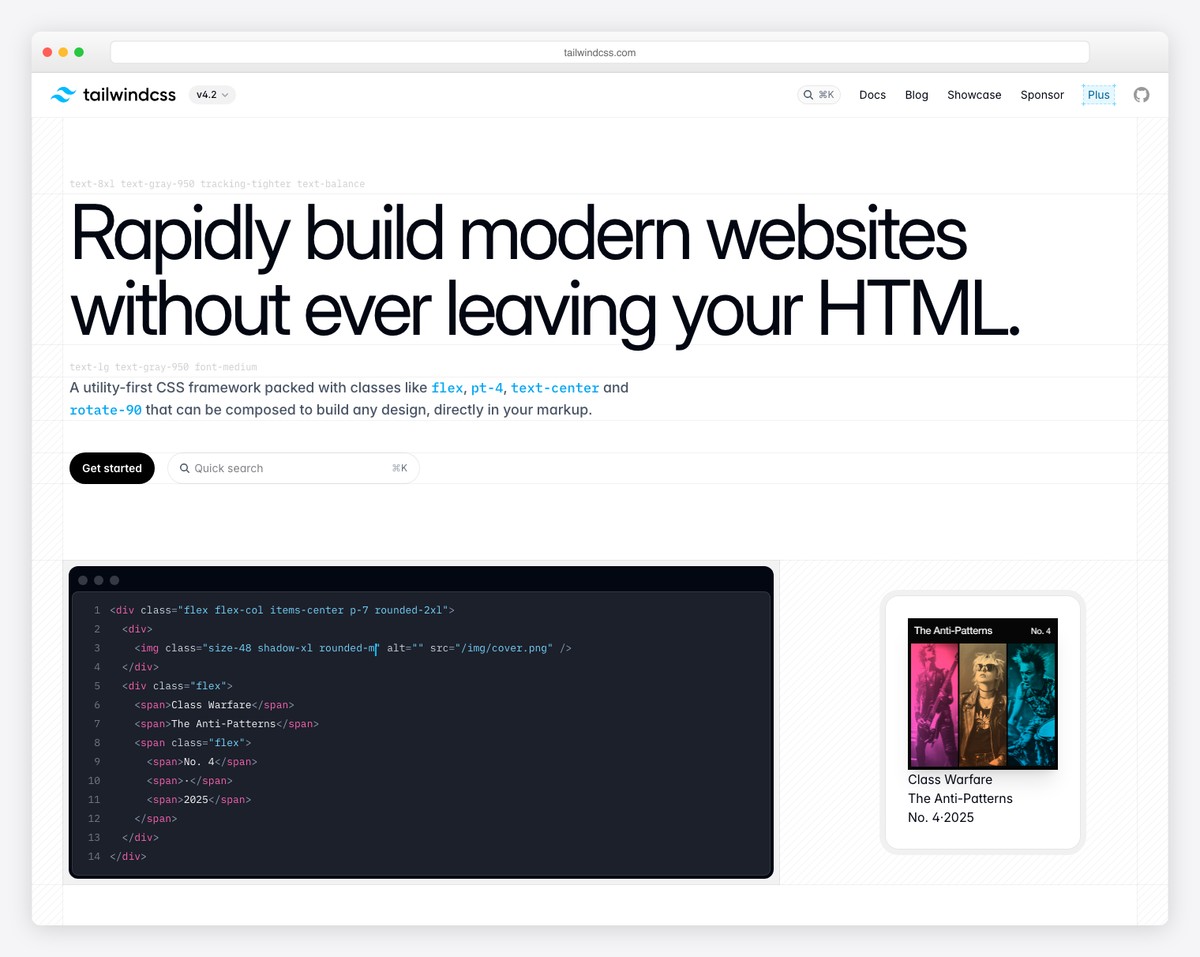
Tailwind CSS has no built-in parts — that’s by design. As a substitute, you compose utilities in your markup or use part libraries like shadcn/ui (11,100+ stars for the admin template), DaisyUI, or Headless UI. The ecosystem has matured quickly: in 2024, “Tailwind admin dashboard” searches returned a handful of choices; in 2026, there are dozens of high-quality templates.
Materials UI presents probably the most complete built-in part set for React functions. The Information Grid, Date Pickers, Autocomplete, and Tree View are production-ready parts that might require vital integration work with Bootstrap or Tailwind. In case your admin dashboard is data-heavy, MUI’s superior parts save weeks of growth.
Customization and Theming
Admin dashboards typically must match model pointers, help white-labeling, or supply a number of themes. Right here’s how every framework handles customization.
Bootstrap makes use of SCSS variables for theming. You override $major, $secondary, and different variables earlier than importing Bootstrap’s SCSS information. This works properly for colour and spacing adjustments, however deeply customizing part constructions means preventing Bootstrap’s opinionated defaults. The 12-column grid system and pre-built parts create a recognizable “Bootstrap look” that’s exhausting to flee solely.
Tailwind CSS supplies the deepest customization via its tailwind.config.js file. Colours, spacing, typography, breakpoints, and animations are all configurable on the design token degree. As a result of Tailwind applies utility courses instantly in markup, you’ve got pixel-level management over each component. There aren’t any default part kinds to override — you construct precisely what you design.
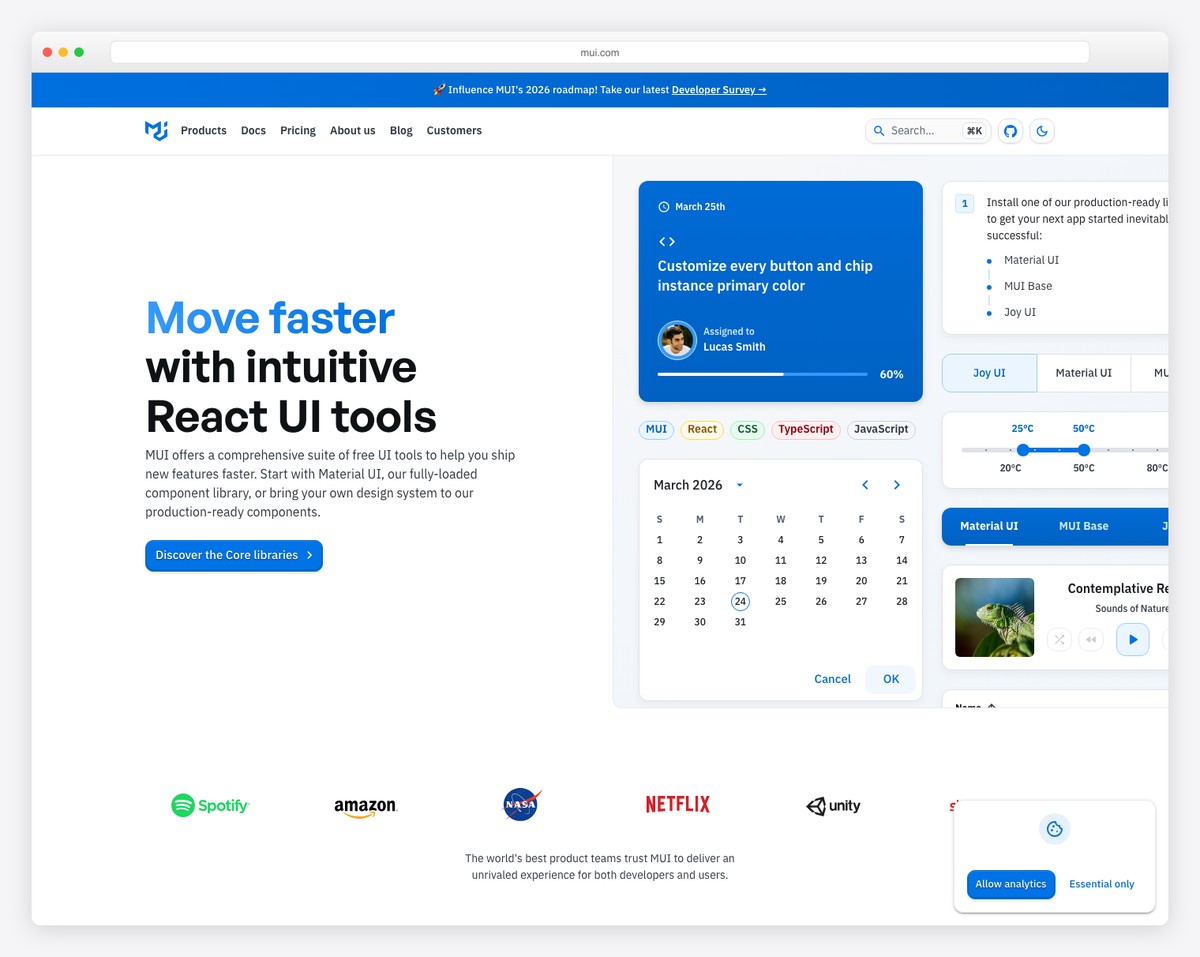
Materials UI makes use of a complete theming system with CSS-in-JS (Emotion). The createTheme() operate allows you to customise palette, typography, spacing, breakpoints, and particular person part kinds. MUI’s sx prop supplies inline model overrides that combine with the theme. The draw back: deep customization means preventing Materials Design’s opinionated aesthetic. Making MUI look “not like Materials Design” requires vital effort.
| Customization Side | Bootstrap 5 | Tailwind CSS | Materials UI |
|---|---|---|---|
| Shade customization | SCSS variables | Config file + CSS variables | Theme palette |
| Element construction | Laborious to vary | Full management (utility-based) | Average (styled system) |
| Typography | SCSS variables | Config file | Theme typography |
| Darkish mode | data-bs-theme |
darkish: variant |
Theme mode |
| White-labeling ease | Average | Wonderful | Good (inside Materials Design) |
| Design uniqueness | Low (Bootstrap look) | Excessive (absolutely customized) | Low-moderate (Materials look) |
Developer Expertise
The framework you select impacts your workforce’s productiveness, hiring pipeline, and onboarding pace. Listed below are the sensible developer expertise variations.
Bootstrap’s studying curve is the gentlest. Builders acquainted with HTML and CSS could be productive inside hours. The category names are semantic (.btn-primary, .card, .modal), documentation is complete, and Stack Overflow has solutions to just about each Bootstrap query. Based on the State of CSS 2025, 21.6% of builders actively use Bootstrap, which means you possibly can rent builders who already realize it.
Tailwind CSS requires a mindset shift from conventional CSS. As a substitute of writing semantic class names, you compose utility courses in HTML (flex items-center gap-4 p-6 bg-white rounded-lg shadow-sm). This will really feel verbose initially, however builders who undertake the utility-first method typically report quicker iteration speeds than with every other framework. The 37% State of CSS adoption price (2025) displays its rising developer base.
Materials UI has the steepest studying curve as a result of it requires React data plus MUI’s part API, theming system, and styling method. The payoff is entry to probably the most complete part library obtainable. MUI’s TypeScript help is great, and the event expertise with autocomplete and kind checking is productive when you’re previous the training part.
| DX Issue | Bootstrap 5 | Tailwind CSS | Materials UI |
|---|---|---|---|
| Time to productiveness | Hours | Days | Weeks |
| Documentation high quality | Wonderful | Wonderful | Wonderful |
| IDE help | Good | Wonderful (IntelliSense plugin) | Wonderful (TypeScript) |
| Stack Overflow solutions | Most (longest historical past) | Rising quickly | Many (React-specific) |
| Framework dependency | None | None | React solely |
| Construct instrument requirement | Non-obligatory (CDN works) | Required (PostCSS/CLI) | Required (React toolchain) |
| Hiring pool measurement | Largest | Rising quickest | React builders |
Finest Admin Templates for Every Framework
Bootstrap Dashboard Templates
AdminLTE
Probably the most starred Bootstrap admin template (44K+ GitHub stars). Free, open supply, filled with widgets and web page layouts.
Tabler
Trendy Bootstrap 5 dashboard with 38K+ stars. Lovely default design, responsive, and developer-friendly.
CoreUI
Cross-framework dashboard (Bootstrap + React/Angular/Vue). Free and Professional variations. Enterprise-grade parts.
Metronic
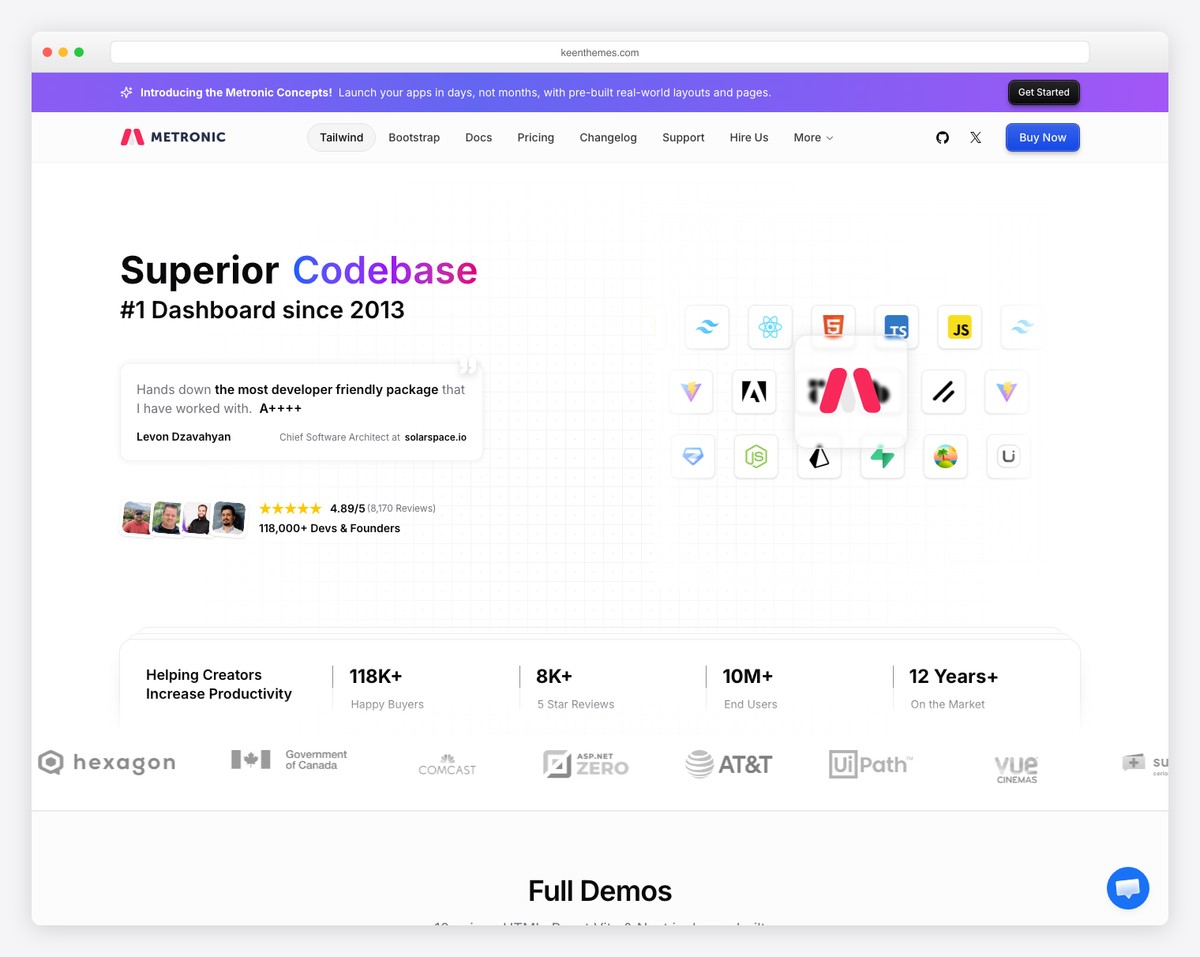
Premium Bootstrap dashboard ($49+). Business benchmark with 118K+ consumers. Large part and format library.
Tailwind CSS Dashboard Templates
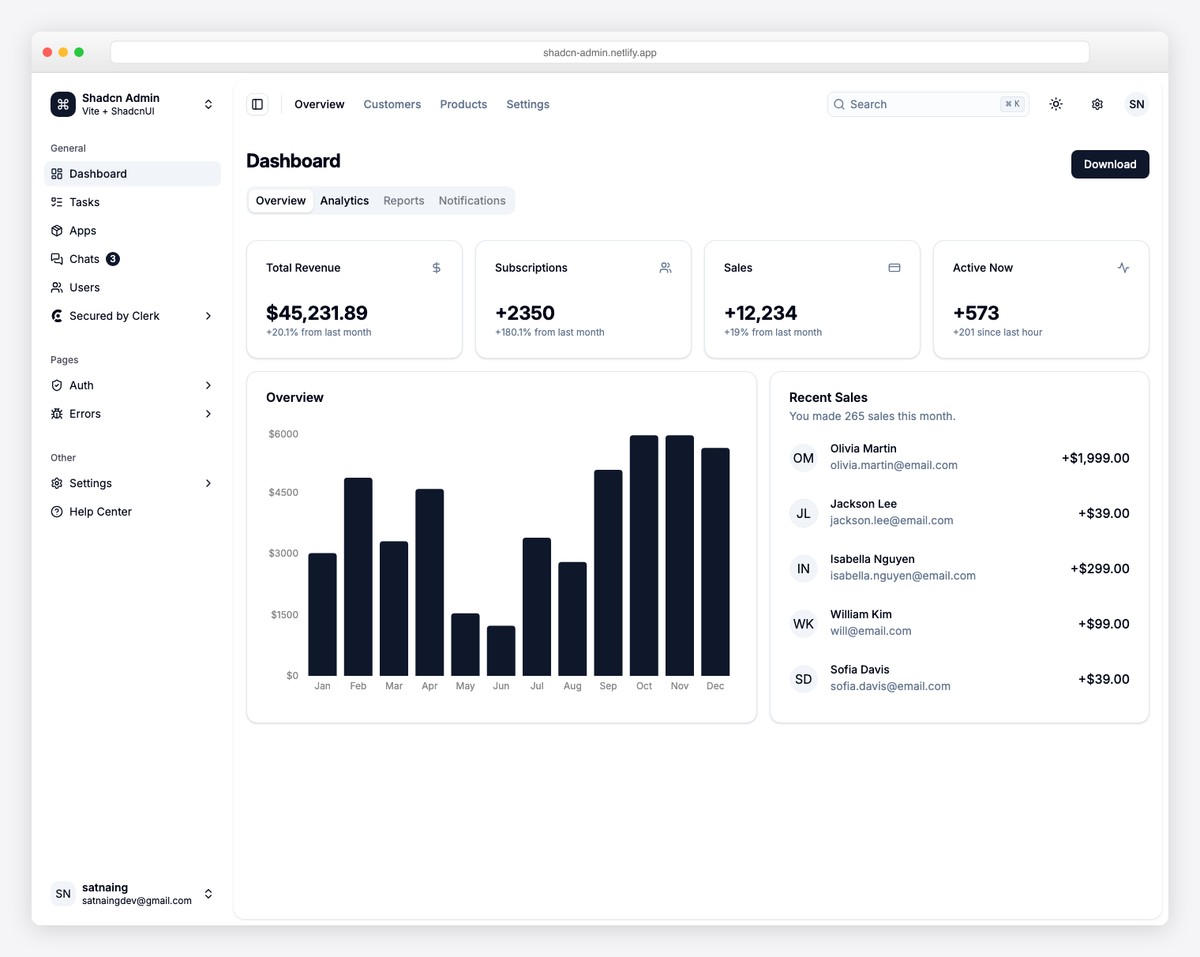
Shadcn Admin
Constructed with shadcn/ui + Vite + TypeScript. The most well-liked open supply Tailwind dashboard for contemporary React initiatives.
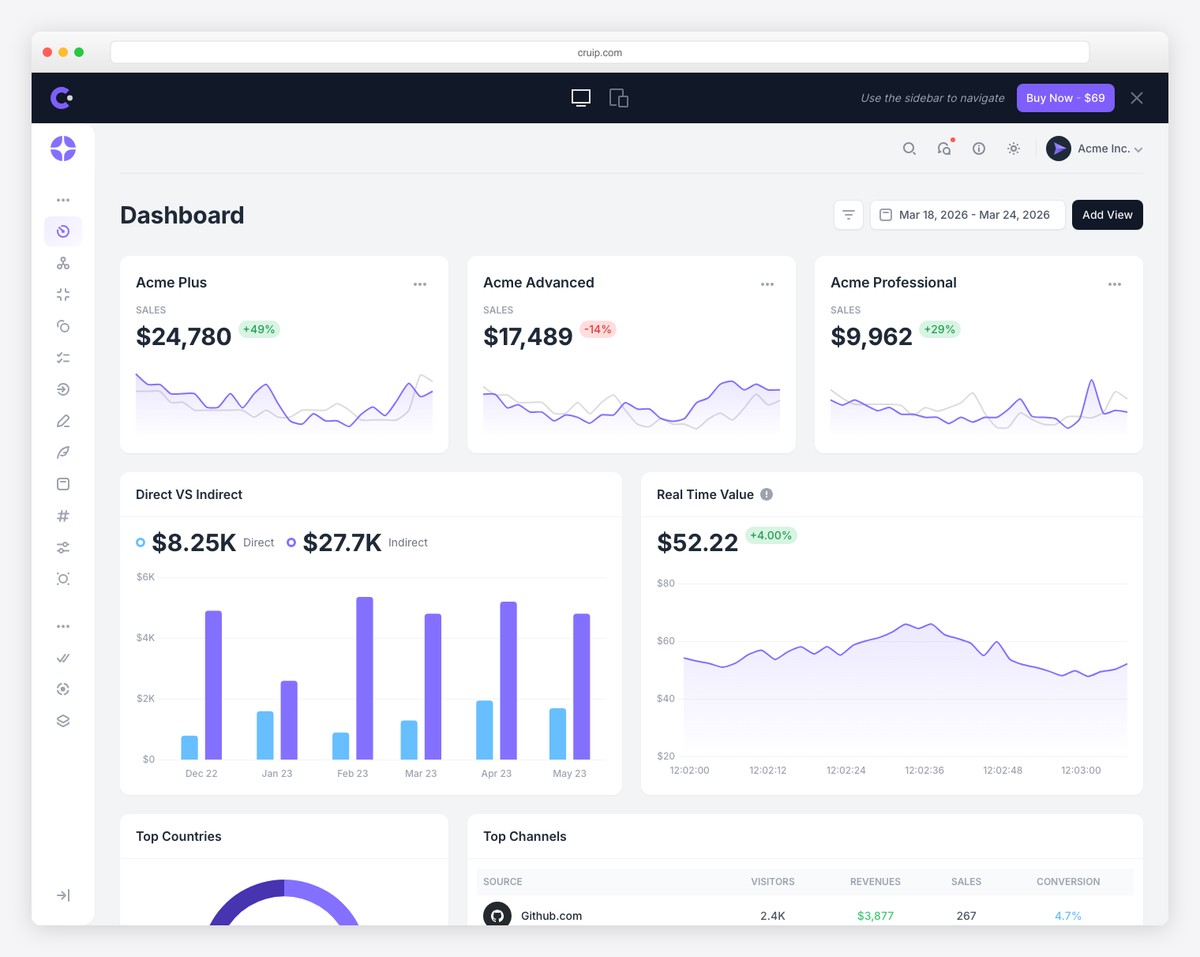
Mosaic Lite
Clear SaaS dashboard with analytics focus. Free Tailwind model by Cruip. Nice for startup dashboards.
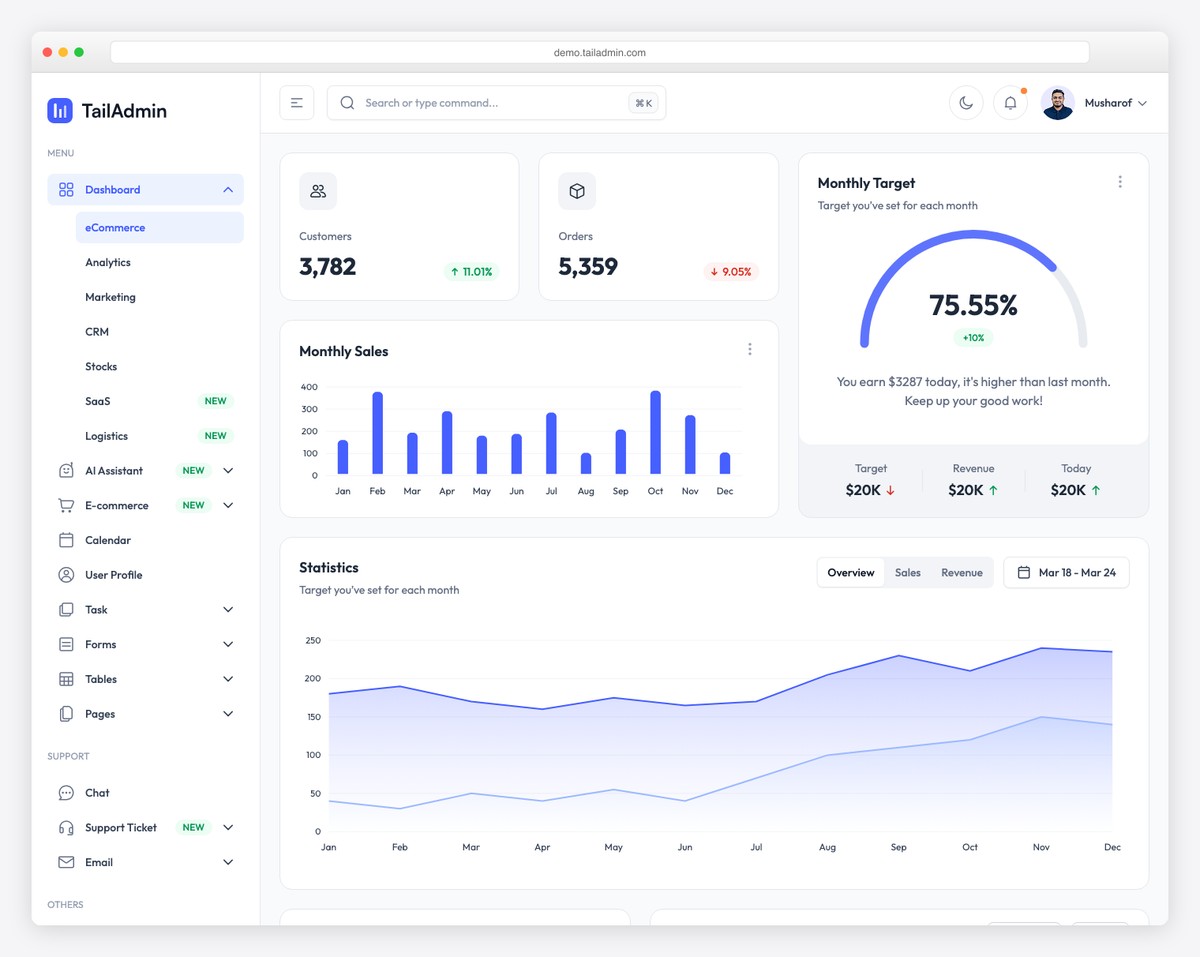
TailAdmin
Subsequent.js + Tailwind CSS dashboard. Free open-source model with 200+ UI parts. Darkish mode included.
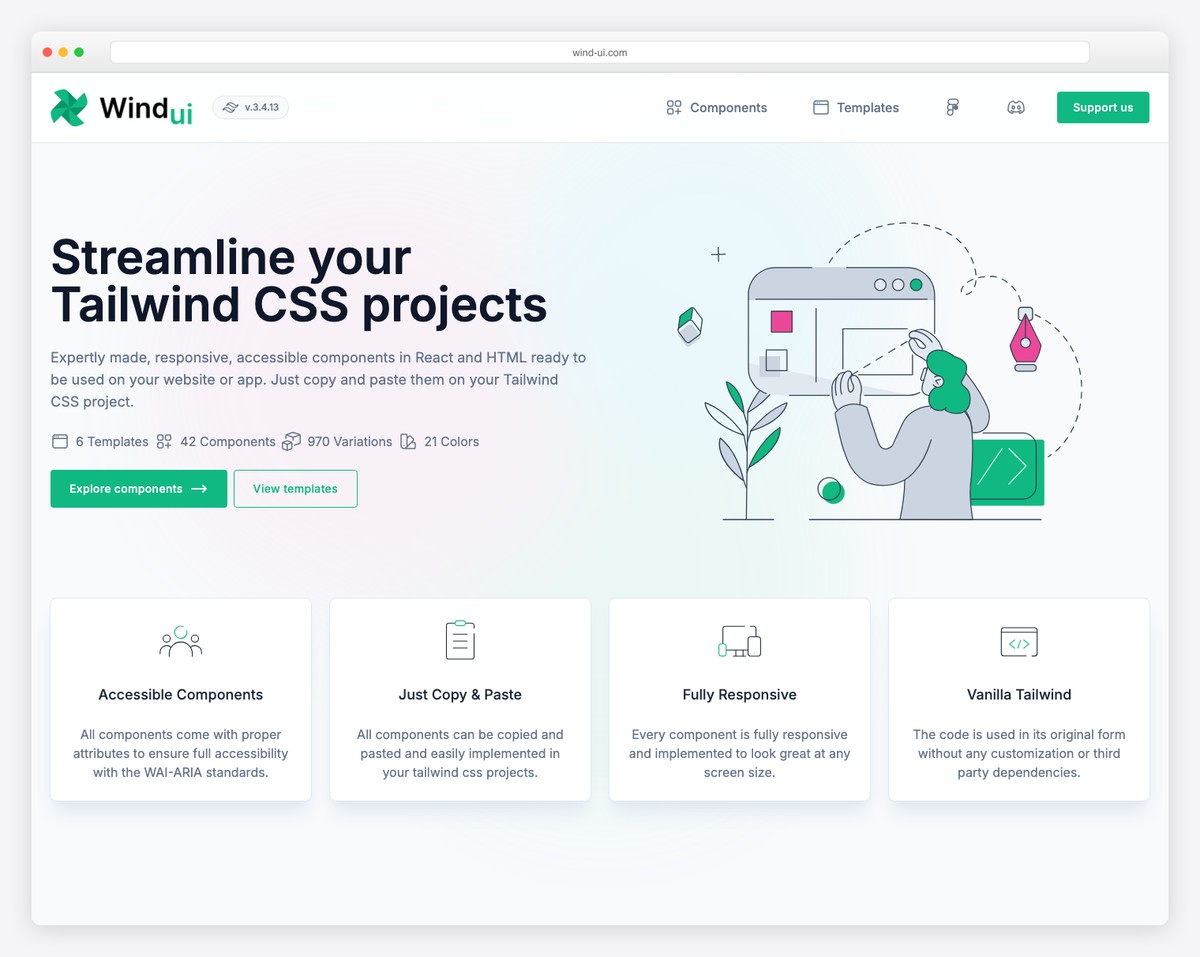
WindUI
42 accessible parts, 970 variations. Copy-paste Tailwind parts for React and HTML. Free and open supply.
Material UI Dashboard Templates
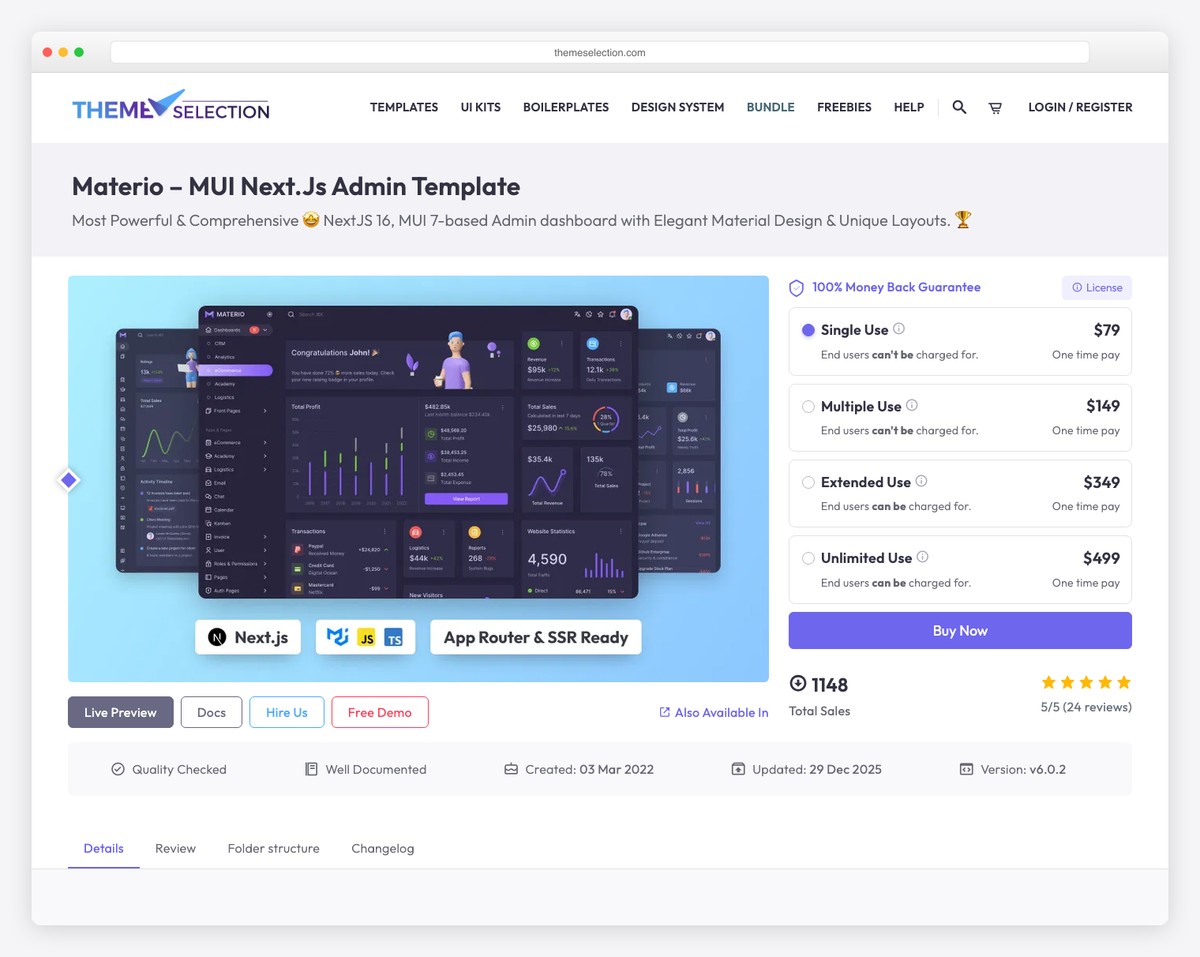
Materio
Premium MUI + Subsequent.js template. TypeScript, darkish/gentle mode, 7 dashboard layouts. From $69.
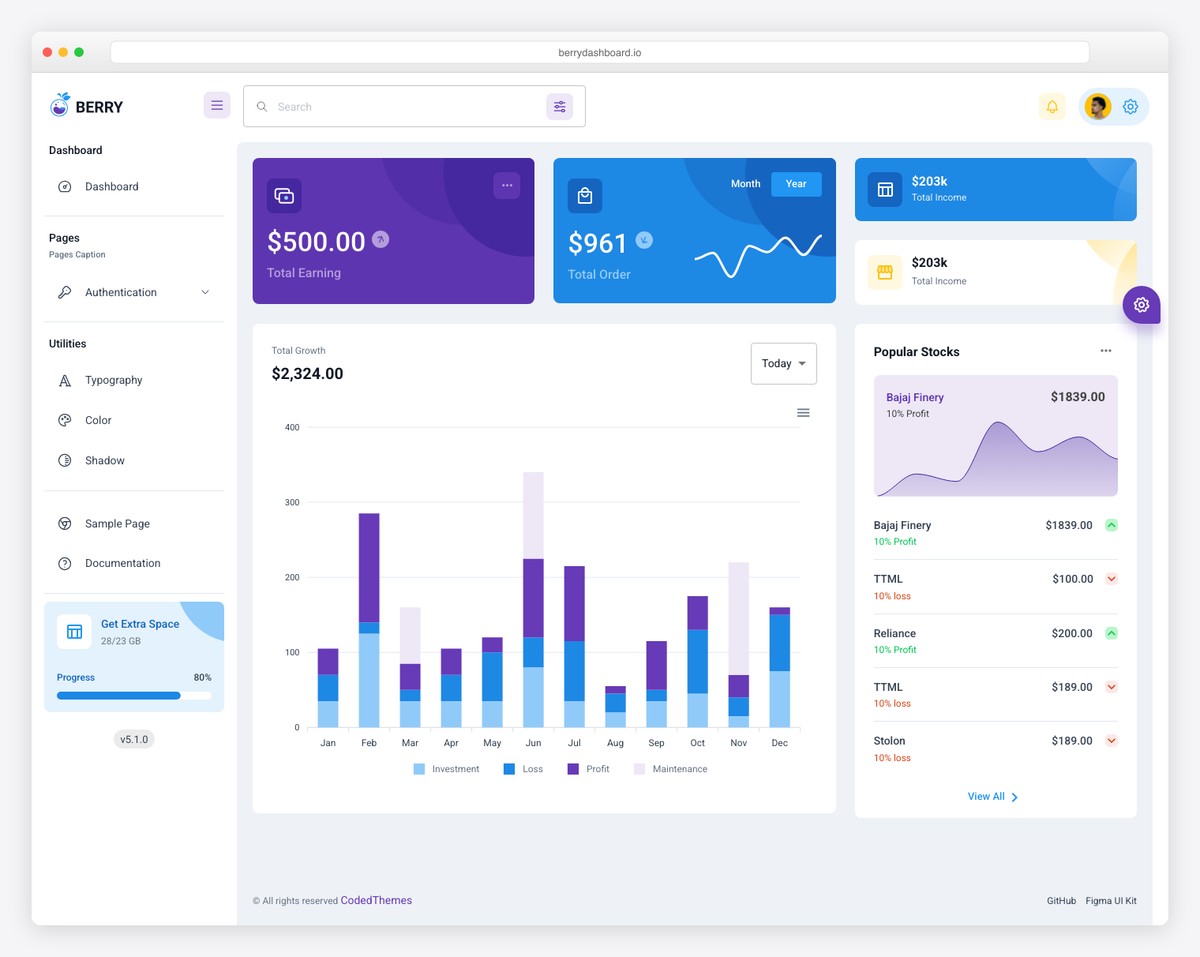
Berry
In style MUI dashboard by CodedThemes. Free React model obtainable. Materials Design 3 impressed.
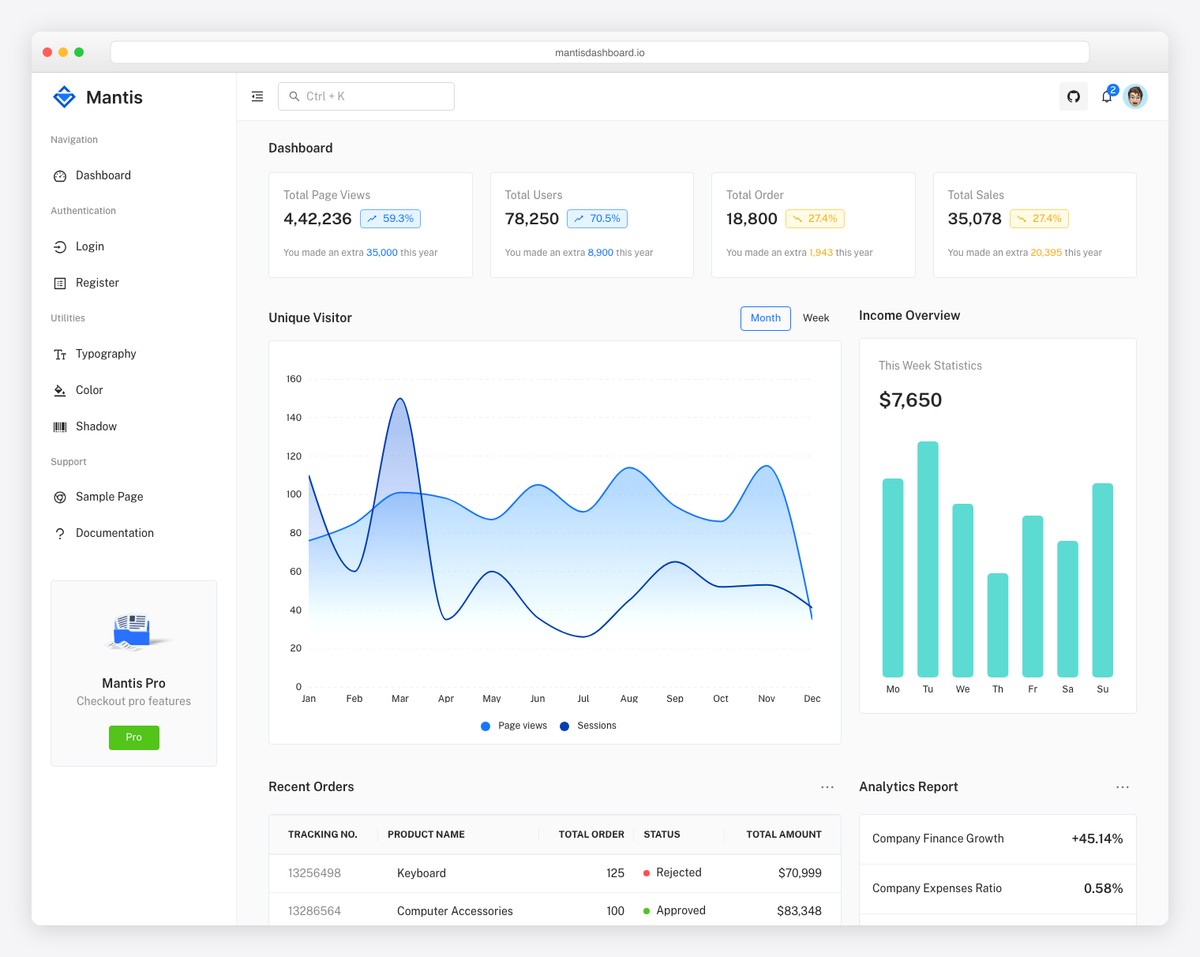
Mantis
Open supply MUI v5 React dashboard. Clear minimal design with free model. Nice for getting began.
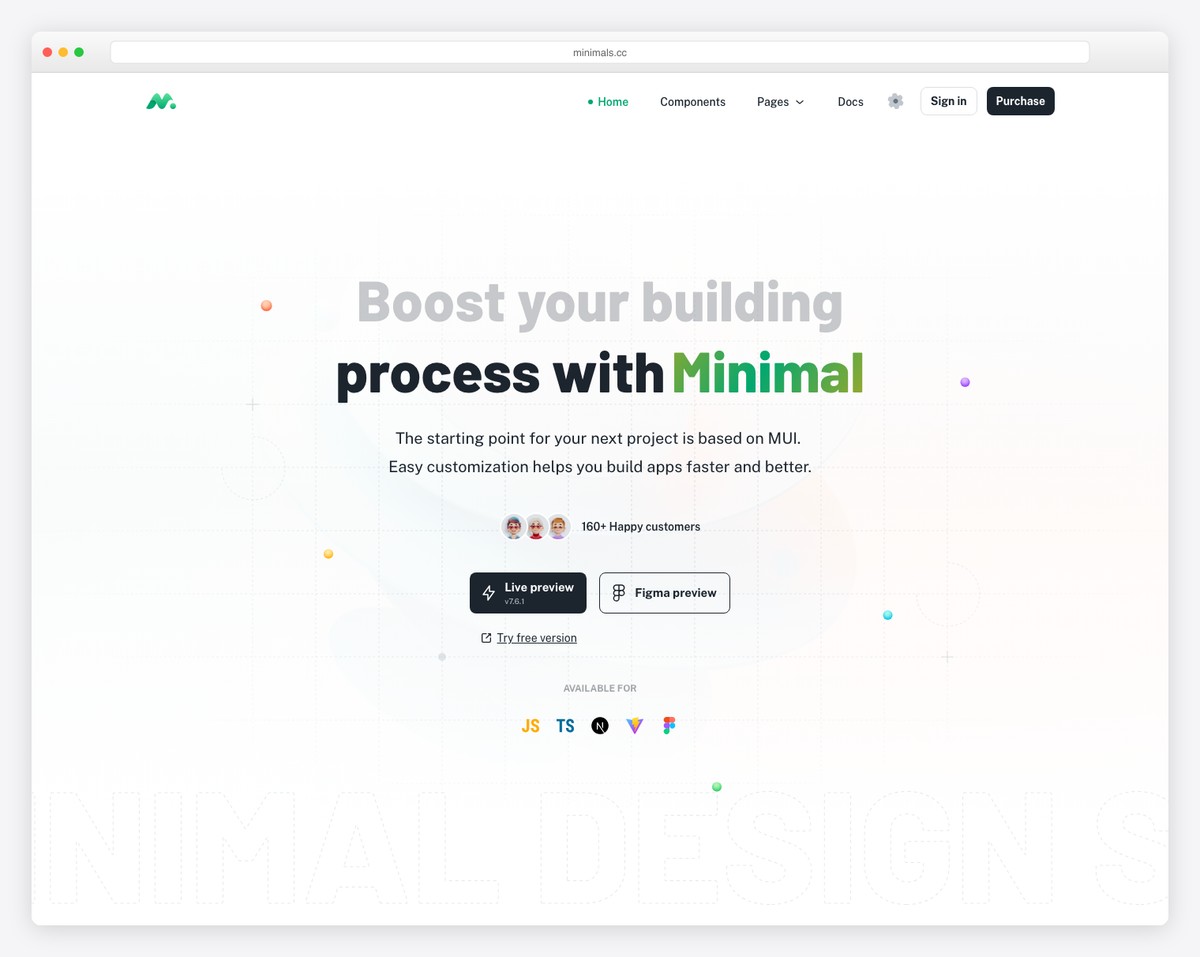
Minimal UI
Premium MUI starter equipment ($59+). Utilized by 10,000+ builders. Manufacturing-ready with full options.
When to Use Every Framework
The appropriate framework is dependent upon your particular constraints. Right here’s a call matrix based mostly on frequent admin dashboard eventualities.
| State of affairs | Finest Alternative | Why |
|---|---|---|
| Speedy prototyping / MVP | Bootstrap | Quickest time to a working dashboard with pre-built parts |
| Customized SaaS admin panel | Tailwind CSS | Full design management, smallest bundle, no “template look” |
| React enterprise utility | Materials UI | Most complete React part library with TypeScript |
| Multi-framework workforce | Bootstrap or Tailwind | Each are framework-agnostic; MUI is React-only |
| Efficiency-critical dashboard | Tailwind CSS | Smallest manufacturing CSS, greatest Core Net Vitals scores |
| Legacy challenge upkeep | Bootstrap | Largest current codebase, most builders acquainted with it |
| Information-heavy admin (grids, tables) | Materials UI | MUI Information Grid is probably the most superior React desk part |
| Server-rendered (Laravel, Django, Rails) | Bootstrap or Tailwind | Each work with out a JavaScript framework; MUI requires React |
| Design company / white-label product | Tailwind CSS | Most customizable, no opinionated design language to combat |
| Accessibility-first challenge | Materials UI or Bootstrap | Each have intensive ARIA help constructed into parts |
Select Bootstrap if you could ship quick, your workforce consists of junior builders, you’re working with a server-rendered backend (Laravel, Django, Rails), otherwise you’re sustaining an current Bootstrap challenge. Bootstrap’s energy is predictability and pace.
Select Tailwind CSS if you need full design management, you’re constructing a SaaS product with a customized design system, you care about bundle measurement and efficiency, otherwise you need to keep away from the “seems like Bootstrap” downside. Tailwind’s energy is flexibility and output high quality.
Select Materials UI if you’re constructing a React utility, you want superior information parts (Information Grid, Date Pickers, Tree View), your workforce is comfy with React’s ecosystem, or Materials Design aligns together with your model. MUI’s energy is part completeness.
The Market Is Shifting
The info tells a transparent story about the place the trade is heading. Tailwind CSS’s 69 million weekly npm downloads dwarf Bootstrap’s 2.7 million — although npm doesn’t seize Bootstrap’s vital CDN utilization. The State of CSS 2025 survey reveals 37% of builders utilizing Tailwind vs. 21.6% for Bootstrap, with Tailwind main satisfaction scores.
For admin dashboards particularly, the shift is much more pronounced. Quote from the admin template market evaluation: “Tailwind CSS has just about taken over the admin dashboard house at this level, with what was once Bootstrap’s unchallenged territory now filled with Tailwind-based alternate options that look higher, weigh much less, and provides extra management.”
That stated, Bootstrap isn’t going anyplace. Its 174,000 GitHub stars symbolize the most important CSS framework neighborhood ever constructed, and thousands and thousands of current admin panels run on Bootstrap. The framework’s evolution (native darkish mode in 5.3, utility API enhancements) reveals continued funding in staying related.
Materials UI occupies a distinct area of interest solely — it’s the clear winner for React functions that want Materials Design or superior information parts. Its 98,000 GitHub stars and rising npm downloads mirror React’s continued dominance within the frontend framework house.
Often Requested Questions
Is Tailwind CSS changing Bootstrap?
In new challenge adoption, sure. Tailwind CSS leads the State of CSS 2025 survey at 37% utilization vs. Bootstrap’s 21.6%, and its npm downloads are 25x larger. Nonetheless, Bootstrap stays dominant in current initiatives and enterprise codebases. It’s extra of a generational shift than a substitute — new initiatives pattern towards Tailwind, whereas current Bootstrap initiatives proceed to be maintained.
Can I exploit Tailwind CSS with Materials UI?
Technically sure, however it’s not beneficial. MUI makes use of CSS-in-JS (Emotion) for styling, which might battle with Tailwind’s utility courses. Some templates (like Materio) mix MUI parts with Tailwind for format, however this requires cautious configuration to keep away from specificity conflicts. Select one major styling method.
Which framework is greatest for admin dashboard efficiency?
Tailwind CSS produces the smallest CSS bundles (6-12 KB gzipped in manufacturing) and reveals ~40% higher Core Net Vitals scores in comparison with Bootstrap in benchmarks. Bootstrap is average (~53 KB gzipped). MUI is the heaviest on account of CSS-in-JS overhead however could be optimized with tree-shaking and code-splitting.
Is Bootstrap nonetheless price studying in 2026?
Sure, for particular contexts. In case you work with server-rendered frameworks (Laravel, Django, Rails), keep current Bootstrap initiatives, or want the quickest prototyping pace, Bootstrap data is effective. Nonetheless, should you’re beginning contemporary with React or Vue, studying Tailwind CSS will serve you higher for brand new initiatives.
What’s shadcn/ui and the way does it relate to Tailwind CSS?
shadcn/ui is a set of reusable React parts constructed on Radix UI primitives and styled with Tailwind CSS. Not like conventional part libraries, you copy the part code into your challenge and personal it fully. It has develop into the de facto part library for Tailwind CSS + React admin dashboards, with the Shadcn Admin template reaching 11,100+ GitHub stars.
Which framework has probably the most admin dashboard templates obtainable?
Bootstrap has probably the most by quantity on account of its 15-year head begin — 1000’s of templates exist on ThemeForest alone. Tailwind CSS templates are rising quickest, with high-quality choices like Shadcn Admin, TailAdmin, and Mosaic main the house. MUI has fewer devoted admin templates, however they are usually complete (Materio, Berry, Minimal UI Package).
Can I migrate from Bootstrap to Tailwind CSS?
Sure, however it’s a major effort. It’s worthwhile to change Bootstrap’s part courses with Tailwind utilities, swap JavaScript plugins with headless alternate options (Headless UI, Radix UI), and rebuild responsive layouts. For big codebases, a gradual migration — utilizing each frameworks quickly — is extra sensible than a big-bang rewrite.
Which framework is greatest for darkish mode?
All three help darkish mode, however the implementation differs. Tailwind’s darkish: variant is probably the most versatile — you add darkish kinds inline alongside gentle kinds. Bootstrap 5.3’s data-bs-theme attribute supplies official darkish mode help on the framework degree. MUI’s theme palette method works properly inside React however requires extra setup.
Do I want a CSS framework for an admin dashboard?
Technically no — you possibly can construct every part with vanilla CSS. Nonetheless, admin dashboards require constant styling throughout dozens of part sorts, responsive layouts, type dealing with, and navigation patterns. A CSS framework saves a whole lot of hours of labor and supplies examined, accessible implementations. The State of CSS 2025 reveals that “no CSS framework” ranked #13 out of 21, indicating most builders favor utilizing one.
Which framework has the very best documentation?
All three have wonderful documentation, however they excel in numerous methods. Bootstrap’s docs are probably the most complete with reside examples for each part. Tailwind’s docs are the best-organized with its searchable utility class reference. MUI’s docs are probably the most interactive with a part playground and TypeScript API references. For admin dashboard growth, all three present adequate documentation to work productively.
Was this text useful?
SureNo
